The Rise of EdTech and Digital Learning Businesses in Africa (2025 Outlook)










Introduction: The Digital Transformation of Education in Africa
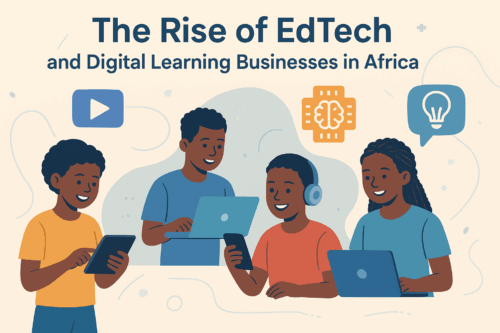
Across Africa, a quiet revolution is taking place — one powered by technology, innovation, and a new generation of learners. The education sector, long constrained by limited access and outdated systems, is being reshaped by EdTech startups that are making learning more accessible, affordable, and personalized.
With over 60% of Africa’s population under the age of 25, the demand for flexible, skill-based education is soaring. Digital tools are breaking down geographical barriers, allowing millions to access learning from smartphones and low-cost devices. From e-learning platforms to coding bootcamps, EdTech is redefining how Africans learn, teach, and earn.
Why EdTech Is Africa’s Next Big Industry (2025 Outlook)
As we move through 2025, education technology (EdTech) has emerged as one of Africa’s fastest-growing industries. The COVID-19 pandemic accelerated digital adoption, pushing schools, governments, and startups to explore remote learning solutions.
Countries like Nigeria, Kenya, South Africa, Ghana, and Rwanda are leading the charge, with government policies now supporting digital education infrastructure. Investors are also taking note — the African EdTech sector attracted over $200 million in funding in 2024, signaling growing confidence in the continent’s digital learning future.
How Startups Are Reshaping Learning Through Technology
E-Learning Platforms and Virtual Classrooms
Startups like uLesson, Eneza Education, and Gradely are redefining how African students learn. Through mobile apps, SMS-based lessons, and video tutorials, these platforms bring quality education to even the most remote areas.
Coding and Robotics for Children
Early tech education is now seen as essential to preparing Africa’s youth for the digital economy. Coding clubs and robotics labs are equipping children with problem-solving and innovation skills, setting the stage for a future driven by technology.
AI-Driven Personalized Education
Artificial intelligence is transforming the learning experience. From AI tutors that adapt lessons to a learner’s pace to chatbots offering instant feedback, personalization is making education more engaging and effective.
Top EdTech Startups Making Waves in Africa
Several startups are leading the EdTech transformation:
- uLesson (Nigeria): Delivers interactive video-based learning content tailored to African curricula.
- Eneza Education (Kenya): Uses SMS and mobile web technology to reach rural students.
- Moringa School (Kenya): Offers intensive coding and software development courses for job readiness.
- Gradely (Nigeria): Provides data-driven personalized learning for students and teachers.
- Kukua (Kenya): Combines storytelling and gamified learning to improve literacy among children.
These innovators are not only creating profitable businesses but also solving critical challenges in access to quality education.
Funding and Investments in EdTech
Global and Local Support
Global organizations such as Mastercard Foundation, IFC, Google for Education, and UNICEF are supporting Africa’s growing EdTech ecosystem. Locally, programs like the Injini EdTech Accelerator and Tony Elumelu Foundation are helping startups access grants, mentorship, and scale-up resources.
Investors Betting on Digital Learning
Venture capital firms like Partech Africa, Launch Africa Ventures, and Future Africa have all backed education startups in recent years — reflecting confidence in EdTech’s long-term potential.
The Role of Teachers in the Digital Learning Revolution
From Classrooms to Online Courses
Teachers are no longer confined to physical classrooms. With platforms like Teachable, Thinkific, and Udemy, many educators are transforming their expertise into digital products — creating online courses, e-books, and video tutorials that generate income while reaching wider audiences.
Building Online Academies
African educators are leveraging their experience to build digital brands and academies. By combining teaching with entrepreneurship, they are contributing to both education innovation and youth empowerment.
Starting an EdTech Business with Limited Resources
Low-Cost Digital Strategies
Launching an EdTech venture no longer requires massive investment. Entrepreneurs can leverage open-source tools, YouTube tutorials, and social media platforms like WhatsApp and Instagram to reach learners affordably.
Collaboration and Partnerships
Strategic partnerships with schools, NGOs, and government agencies are helping startups pilot programs, gather feedback, and expand regionally. Such collaborations are vital for scalability and impact.
Emerging Trends in EdTech (2025 and Beyond)
The future of education is being shaped by innovation. Expect to see:
- Gamification to increase learner motivation.
- Microlearning for bite-sized, flexible education.
- AI tutors and chatbots for adaptive instruction.
- Virtual and augmented reality tools for immersive learning.
- Mobile-first design to reach learners across all demographics.
These trends are transforming learning into an experience that is interactive, data-driven, and accessible from anywhere.
Challenges and Solutions for EdTech Startups
Despite the momentum, EdTech ventures face obstacles such as limited internet access, device affordability, and regulatory hurdles. However, localized solutions — like offline learning modules, low-data platforms, and community learning hubs — are helping startups overcome these barriers.
Additionally, cross-sector partnerships with telecom companies and government bodies are key to expanding digital learning infrastructure across rural Africa.
Scaling and Sustainability in EdTech
For EdTech startups to achieve long-term impact, sustainability must be built into their business models. Regional expansion, localized content, and impact-driven investment are crucial. Participation in programs like Google for Startups, Techstars, and Injini Accelerator provides mentorship and visibility for African entrepreneurs looking to scale.
Case Studies: How African EdTech Startups Are Driving Real Impact
Across the continent, several success stories showcase the power of EdTech in transforming education and livelihoods.
- uLesson (Nigeria) has reached millions of learners by offering video lessons aligned with national curricula. The startup’s mobile-first strategy helps students in low-bandwidth regions access affordable, quality education.
- Eneza Education (Kenya) continues to make learning inclusive through SMS-based lessons, helping students in rural areas learn even without internet access.
- Moringa School (Kenya) and Gebeya (Ethiopia) are bridging Africa’s tech skills gap by training software developers and connecting them with remote job opportunities across the world.
- Ubongo (Tanzania) uses animation and storytelling to teach children basic math, science, and life skills — proving that local content and creativity can make a global impact.
These examples demonstrate that the success of EdTech in Africa lies not just in technology itself, but in understanding local needs, languages, and challenges.
The Business Opportunity in Africa’s EdTech Sector
Entrepreneurs and investors are beginning to recognize the massive potential in Africa’s education technology market. With over 600 million people under the age of 25, the continent is home to the world’s youngest population — and the demand for upskilling, retraining, and accessible education has never been higher.
The African EdTech market is projected to surpass $1.5 billion by 2030, driven by smartphone penetration, increasing internet access, and the rise of digital-first learners. Sectors like STEM education, mobile learning, and AI-driven tutoring will continue to attract funding.
For entrepreneurs, this means there’s never been a better time to build education solutions that are scalable, affordable, and localized.
Government and Private Sector Collaboration in Digital Learning
The success of Africa’s digital learning ecosystem depends heavily on collaboration between the public and private sectors.
- In Ghana, the government’s Digital Skills for Jobs program and partnerships with platforms like Coursera and Google Africa are expanding online education access.
- Kenya’s Ministry of ICT continues to promote innovation through initiatives like the Ajira Digital Program, which equips youth with freelance and remote work skills.
- Rwanda remains a model for e-learning adoption, with national strategies promoting ICT integration in schools and vocational training centers.
Private EdTech startups are complementing these efforts by designing innovative solutions that align with government education goals, especially in rural and underserved regions.
The Role of Digital Skills in Africa’s Economic Future
Digital literacy is no longer optional — it’s essential. The Fourth Industrial Revolution (4IR) is transforming industries across Africa, and education must evolve with it.
EdTech platforms that teach coding, entrepreneurship, and problem-solving are helping prepare Africa’s youth for the future of work. The rise of digital freelancers, content creators, and online teachers demonstrates how education and employment are becoming interconnected in the digital economy.
By investing in digital learning, Africa is not just creating a tech-savvy generation — it’s building a workforce capable of leading innovation across FinTech, HealthTech, and AgriTech sectors.
Sustainability and the Future of African EdTech
The future of EdTech in Africa depends on three key pillars: sustainability, inclusivity, and collaboration.
- Sustainability: Startups must develop viable business models that combine profitability with social impact. Subscription models, freemium access, and public-private partnerships are proving effective.
- Inclusivity: Digital education must reach marginalized communities — including girls, people with disabilities, and those in rural regions — through localized languages and accessible formats.
- Collaboration: Long-term impact will depend on strong partnerships among governments, NGOs, investors, and educators to ensure that technology enhances — not replaces — traditional education systems.
Empowering Africa’s Next Generation of Learners
Africa’s EdTech journey is still unfolding, but the progress so far is nothing short of transformative. Startups are rewriting the rules of education, investors are fueling innovation, and teachers are embracing digital entrepreneurship.
As digital entrepreneurship.
As the continent continues to embrace digital transformation, education will remain the foundation for sustainable growth, innovation, and economic empowerment.
The rise of EdTech is not just about apps and platforms — it’s about giving every African learner a chance to thrive in a world driven by knowledge and creativity.
In the words of uLesson founder Sim Shagaya, “Education is the foundation upon which we can build Africa’s future — one student, one lesson at a time.”
Conclusion: Building a Sustainable Digital Learning Ecosystem
Africa’s EdTech revolution is more than a trend — it’s a movement redefining how millions learn and grow. By blending innovation, inclusion, and entrepreneurship, EdTech startups are creating a future where quality education is no longer a privilege but a right.
The road ahead will require collaboration between governments, investors, educators, and innovators. Together, they can build a sustainable digital learning ecosystem that empowers every African learner to thrive in the global knowledge economy.