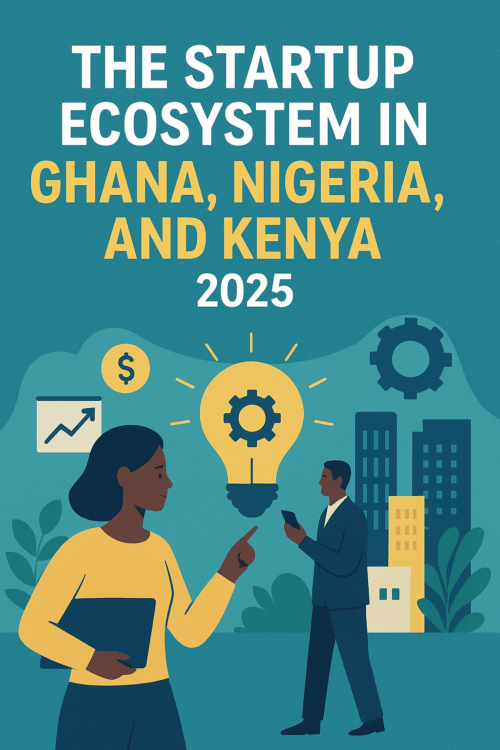
The Startup Ecosystem in Ghana, Nigeria, and Kenya (2025 Outlook)










Africa’s Emerging Startup Powerhouses
Africa’s startup ecosystem is thriving — and at the center of this transformation stand Ghana, Nigeria, and Kenya, three of the continent’s most dynamic innovation hubs. These countries are redefining entrepreneurship in Africa, leading in technology adoption, investment attraction, and youth-driven innovation.
As we move through 2025, each ecosystem is maturing — with government support, investor confidence, and international partnerships shaping a more connected and sustainable digital economy.
The Startup Ecosystem in 2025
Growth of West and East Africa’s Innovation Scene
The startup landscape in Ghana, Nigeria, and Kenya has evolved from small innovation clusters into vibrant ecosystems of digital entrepreneurs, developers, and investors. From FinTech to AgriTech and HealthTech, African founders are building solutions that address real socio-economic challenges while creating global opportunities.
In 2025, the focus is on sustainability, inclusion, and scale — turning local innovations into continental and international enterprises.
Major Startup Hubs Driving Innovation
- Ghana: Home to MEST Africa and Impact Hub Accra, Ghana continues to nurture tech talent and startup incubation, positioning itself as West Africa’s rising innovation star.
- Nigeria: With Co-Creation Hub (CcHub) and Zone Tech Park, Nigeria remains a powerhouse for venture capital and digital entrepreneurship, especially in FinTech and EdTech.
- Kenya: Known as the “Silicon Savannah,” Kenya’s iHub, Nailab, and Konza Technopolis are advancing East Africa’s startup growth, especially in mobile innovation and AgriTech.
Government Support and Policy Reforms
National Startup Acts and Digital Policies
Governments across Africa are realizing the power of startups in driving economic growth.
- Ghana’s Startup Bill supports incubation and youth innovation programs.
- Nigeria’s Startup Act provides legal frameworks for tech businesses to thrive.
- Kenya’s Innovation Policy focuses on digital infrastructure and R&D incentives.
The AfCFTA Digital Protocol further enhances regional collaboration, simplifying cross-border trade and investment among African startups.
Accelerators and Incubators Empowering Founders
From early-stage founders to scale-ready ventures, accelerators and incubators are shaping Africa’s innovation journey.
Programs like MEST Accelerator, Tony Elumelu Foundation, Founders Factory Africa, and Google for Startups Africa provide mentorship, technical support, and access to funding.
These initiatives have been instrumental in transforming small local startups into globally recognized companies, inspiring a new wave of African innovators.
African Startups Making Global Waves
African startups are now competing on the global stage.
- Flutterwave and Paystack revolutionized payments.
- MPharma improved access to healthcare.
- Andela and Twiga Foods built scalable workforce and supply chain models.
These success stories showcase Africa’s potential to innovate for both local needs and global markets — proving that world-class innovation can come from Accra, Lagos, or Nairobi.
Funding and Investment Trends (2024–2025)
Venture capital continues to pour into African startups, with FinTech, AgriTech, and HealthTech leading the charge. Firms like Future Africa, Partech Africa, Launch Africa Ventures, and GreenTec Capital have been among the top investors fueling this growth.
In 2025, the trend is shifting toward impact-driven investments, focusing on startups that deliver measurable social and economic change.
Accessing and Thriving in Local Startup Ecosystems
Networking, Mentorship, and Growth Platforms
For new founders, the first step is to join local innovation hubs or apply to incubators and pitch programs. Events like Ghana Digital Innovation Week, Startup Grind Nairobi, and the Nigeria Innovation Summit provide opportunities to network with investors, partners, and mentors.
These ecosystems are not just about funding — they’re about community, knowledge sharing, and collaboration.
Universities and Innovation Hubs Collaboration
African universities are increasingly collaborating with innovation hubs to bridge research and entrepreneurship. Institutions in Ghana, Nigeria, and Kenya now offer entrepreneurship labs and innovation fellowships that encourage students to develop solutions aligned with industry needs.
This partnership model is helping transform higher education into a launchpad for startups.
Challenges Facing Startups
While progress is undeniable, startups in Africa still face infrastructure limitations, policy uncertainty, and funding gaps.
Connectivity challenges, high operating costs, and limited access to venture capital outside major cities slow growth.
However, regional initiatives and supportive policies are beginning to address these barriers, providing optimism for the future.
Women and Youth Shaping the Future
A defining feature of Africa’s startup ecosystem is the rise of women and young entrepreneurs. Programs such as She Leads Africa, Google Hustle Academy, and Anzisha Prize are nurturing diverse innovators who are breaking barriers and creating inclusive businesses.
These trailblazers are redefining what leadership and innovation look like across the continent.
Regional Collaboration and the AfCFTA Advantage
The African Continental Free Trade Area (AfCFTA) presents one of the biggest opportunities for startups in 2025 and beyond.
By eliminating trade barriers and promoting digital integration, AfCFTA enables startups to scale across borders, access new markets, and collaborate with regional partners.
It’s not just about trade — it’s about building a borderless African innovation ecosystem.
Beyond 2025: What Lies Ahead for Africa’s Startup Ecosystem
The years ahead promise even greater transformation for Africa’s digital economy. As AI, blockchain, and renewable technologies integrate into mainstream business operations, startups in Ghana, Nigeria, and Kenya are uniquely positioned to lead Africa’s participation in the Fourth Industrial Revolution.
1. Strengthening Regional Investment Networks
The rise of Pan-African venture capital is reshaping how startups access funding. Cross-border funds and syndicates are emerging — with local investors collaborating to create pipelines that reduce dependency on foreign capital. This shift is vital for building resilient, Africa-owned innovation economies.
2. Building Infrastructure for Scale
To sustain long-term growth, governments and the private sector must continue investing in digital infrastructure — from affordable broadband and data centers to innovation clusters in secondary cities. When smaller towns and rural regions are connected, Africa’s innovation potential multiplies.
3. Leveraging AI and Emerging Technologies
AI-driven startups in sectors such as agriculture, education, logistics, and healthcare are changing lives at scale. From predictive analytics improving crop yields to chatbots enhancing customer experience, African entrepreneurs are adopting emerging tech to solve deeply local problems with global potential.
Empowering Local Founders: A Call to Action
For aspiring entrepreneurs in Ghana, Nigeria, and Kenya, now is the best time to start, collaborate, and innovate.
With accessible incubators, virtual accelerator programs, and funding competitions available across the continent, entry barriers have never been lower.
Key advice for new founders:
- Start small, think scalable. Begin with a real problem in your community and design a solution that can grow beyond borders.
- Build partnerships early. Collaboration — not competition — is the new engine of success in Africa’s startup ecosystem.
- Focus on impact and sustainability. Investors increasingly favor startups that balance profitability with social responsibility.
The Role of Media and Platforms in Startup Growth
Digital entrepreneurship platforms such as Baobab Entrepreneur play an essential role in promoting innovation stories, connecting founders to funding opportunities, and inspiring the next generation of builders.
By showcasing African success stories, the media helps shift narratives — from aid dependency to innovation-driven prosperity.
Africa’s Next Decade of Innovation
The future of Africa’s economy lies in entrepreneurship, technology, and collaboration.
Ghana, Nigeria, and Kenya are leading the way — each contributing unique strengths to a continental ecosystem that values resilience, creativity, and inclusivity.
From the bustling tech hubs of Lagos and Nairobi to the growing innovation spaces in Accra, Africa’s youth are rewriting what it means to build globally competitive businesses from the continent.
As governments, investors, and founders unite to foster this momentum, the vision is clear:
An Africa where innovation knows no borders, and every entrepreneur has the power to change the world.
Collaborative Ecosystems: The Heartbeat of African Innovation
The most remarkable shift in Africa’s startup landscape is the spirit of collaboration that now defines the region’s innovation culture. Rather than working in silos, entrepreneurs, investors, governments, and academia are joining forces to build an ecosystem that supports shared growth and sustainable impact.
Cross-Border Partnerships and Knowledge Sharing
Programs like AfriLabs, Google for Startups Africa, and Techstars Accelerator are enabling startups from Accra, Lagos, and Nairobi to collaborate through mentorship, training, and cross-market access.
These platforms connect founders to a continental network of investors and mentors, bridging gaps between West and East Africa’s startup economies.
The Rise of Regional Innovation Clusters
In Ghana, the Accra Digital Centre and Impact Hub Accra are nurturing hundreds of early-stage ventures.
Nigeria’s Yaba Valley in Lagos continues to attract top-tier investors and global tech partners, while Kenya’s Silicon Savannah remains one of Africa’s most mature innovation ecosystems — home to fintech disruptors, agri-tech pioneers, and AI-driven education startups.
Pan-African Accelerators Leading the Way
Accelerators such as MEST Africa, Founders Factory Africa, and Tony Elumelu Foundation (TEF) have built scalable pathways for startups to access both mentorship and seed capital.
These programs not only provide funding but also equip founders with leadership training, financial literacy, and business development tools — ensuring that their innovations thrive beyond the initial stages.
Bridging the Urban–Rural Digital Divide
Despite rapid urban growth, much of Africa’s entrepreneurial potential remains untapped in rural areas.
To bridge this divide, digital inclusion projects across Ghana, Nigeria, and Kenya are introducing mobile-first training programs, low-cost internet initiatives, and community tech hubs.
For instance, Kenya’s Ajira Digital Program, Ghana’s Digital Skills for Youth Initiative, and Nigeria’s National Digital Economy Policy are empowering rural youth with practical ICT and entrepreneurship skills.
This push toward inclusivity ensures that the benefits of innovation reach every corner of the continent — not just major cities.
Cultural Entrepreneurship and the Creative Economy
Beyond traditional tech sectors, a new wave of entrepreneurs is merging culture, creativity, and technology.
From fashion-tech startups in Lagos to e-learning platforms in Accra and music distribution apps in Nairobi, Africa’s creative industries are being redefined by digital innovation.
This cultural entrepreneurship boom is opening new opportunities in:
- E-commerce for African-made products
- Digital art and NFT platforms
- Online content creation and influencer marketing
- Creative startups leveraging mobile payments for global reach
These industries are helping position Africa not just as a consumer of global tech but as a creator of original, exportable innovation.
The Way Forward: Empowering the Next Generation of Entrepreneurs
The next chapter of Africa’s startup story belongs to its youth — innovators who are not only tech-savvy but also purpose-driven.
They’re designing solutions for real problems: access to healthcare, education, logistics, and climate resilience.
To accelerate this transformation, stakeholders must focus on:
- Education and digital literacy – integrating entrepreneurship into school curriculums.
- Access to finance – simplifying funding procedures for startups.
- Policy reform – creating predictable, innovation-friendly environments.
- Gender inclusivity – ensuring equal access for women in leadership and tech.
By investing in people, not just technology, Africa can sustain a vibrant and inclusive innovation economy for decades to come.
Final Thoughts: A United Front for Africa’s Future
The ecosystems of Ghana, Nigeria, and Kenya demonstrate that Africa’s growth is no longer theoretical — it’s happening in real time.
Every new startup, accelerator, and investor contributes to a broader vision: a continent that builds, funds, and scales its own innovations.
As the African Continental Free Trade Area (AfCFTA) matures, and as governments align digital strategies, the dream of a connected African startup economy is becoming reality.
With collaboration, smart investment, and visionary leadership, Africa is not just catching up — it’s leading the next global wave of innovation.
“Africa’s greatest resource is its people — creative, resilient, and ready to transform challenges into opportunities.”
Conclusion: The Road Ahead for African Innovation
Ghana, Nigeria, and Kenya are powering Africa’s innovation revolution. With supportive policies, vibrant ecosystems, and world-class talent, these nations are building a future where African startups can compete globally.
As investment grows and collaboration deepens, Africa’s entrepreneurial spirit will continue to rise — proving that the next global tech giants could come from the continent’s heartlands.