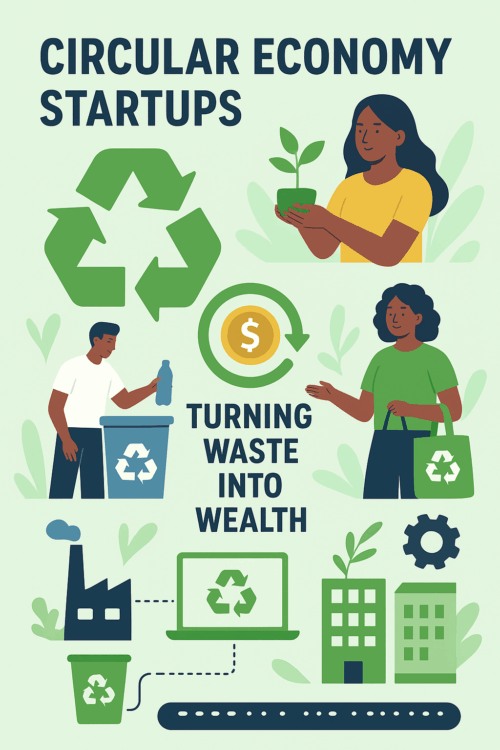
Circular Economy Startups: Turning Waste Into Wealth and Building a Sustainable Future







Introduction: Circular Economy and the Future of Green Startups
As the world moves toward sustainability and resource efficiency, a new wave of entrepreneurship is taking shape — the circular economy. Instead of the traditional “take, make, waste” model, circular startups are creating systems that reuse, recycle, and regenerate materials. This shift not only reduces environmental damage but also unlocks new business opportunities in manufacturing, fashion, construction, and recycling across Africa and beyond.
What Is the Circular Economy?
The circular economy is a regenerative model that aims to minimize waste and make the most of available resources. It encourages designing products that last longer, can be reused, or easily recycled. Unlike the linear economy, where resources are extracted and discarded, circular models keep materials in use — turning sustainability into a profitable business practice.
For entrepreneurs, this model offers a path to sustainable growth, job creation, and reduced environmental impact — aligning profitability with purpose.
Turning Waste Into Wealth
One of the most exciting aspects of the circular economy is the ability to turn waste into wealth. Across the globe, startups are transforming discarded materials into valuable products.
- TerraCycle collects and recycles items that are difficult to process, such as plastic packaging.
- Plastics for Change in India creates a fair-trade marketplace for waste pickers to sell recycled plastics.
- In Africa, innovators are using plastic waste to build furniture, tiles, and eco-friendly construction materials.
These examples prove that sustainability and profitability can go hand in hand. Entrepreneurs who embrace upcycling and recycling innovation are finding new ways to reduce pollution while creating economic value.
Circular Design Across Industries
Fashion and Manufacturing
In the fashion and textile industries, circular design is reducing waste through recycled fabrics, biodegradable materials, and clothing take-back programs. Startups like Ecovative Design use mushroom-based materials to replace plastics and leather alternatives, proving that sustainable design can be both stylish and scalable.
Construction and Product Design
The construction sector is also evolving through modular design and resource efficiency. Builders are reusing materials like glass, concrete, and metals to minimize waste. From eco-homes built with recycled bricks to low-carbon cement innovations, the industry is embracing a greener future.
Local Supply Chains and Community Recycling
At the community level, local initiatives are strengthening the circular supply chain.
Organizations such as WasteAid and The Recycling Partnership work with local governments to develop community-based recycling programs, empowering people to collect, sort, and resell recyclable materials.
These initiatives promote local entrepreneurship and reduce landfill waste while building awareness about sustainability and waste management.
Digital Platforms and Recycling Technology
Technology is accelerating the transition to circular systems. AI, blockchain, and digital marketplaces are now used to track materials, predict waste patterns, and manage recycling logistics.
For example, some platforms connect waste producers with recycling companies in real time, improving transparency and accountability. This wave of eco-innovation is helping startups streamline operations and attract environmentally conscious consumers and investors.
Green Finance and Government Support
Across Africa and other emerging markets, green finance and government incentives are making circular startups more viable. Policies supporting renewable manufacturing, waste management, and eco-friendly production are growing rapidly.
Institutions and funds like the GIZ Innovation Fund and Green Climate Fund provide grants and investment opportunities for sustainable entrepreneurs. This financial support helps bridge the gap between innovation and large-scale implementation.
Challenges and Solutions for Circular Startups
While the potential is enormous, circular startups face challenges such as:
- High operational costs due to limited recycling infrastructure.
- Consumer awareness gaps about sustainable products.
- Regulatory hurdles in waste management and imports.
However, these challenges can be overcome through collaboration, innovation, and education. Partnering with research institutions, leveraging government programs, and adopting digital tools can help startups reduce costs and scale faster.
Global and African Success Stories
Circular innovation is thriving worldwide:
- Loop, a global reuse platform by TerraCycle, offers refillable packaging for household products.
- Ecovative Design produces biodegradable alternatives to plastics using mycelium technology.
- African entrepreneurs are creating low-cost solutions — from turning electronic waste into jewelry to converting food waste into biogas.
These case studies show how circular entrepreneurship can create economic and environmental value across industries.
You can also read on: https://baobabentrepreneur.com/neurotech-and-brain-based-productivity-tools-the-future-of-cognitive-enhancement-in-2025/
The Future of Circular Economy Startups in Africa
Africa is fast becoming a hub for green innovation and circular entrepreneurship. With a growing youth population, increasing awareness of climate change, and high unemployment rates, circular startups offer a sustainable path for inclusive economic growth.
In countries like Ghana, Kenya, and South Africa, young innovators are developing creative ways to manage waste while creating jobs. For example:
- Gjenge Makers in Kenya transforms plastic waste into durable paving bricks.
- Reform Africa in Uganda turns discarded plastics into fashionable bags and accessories.
- Recycle Up! Ghana engages youth in recycling education and waste collection.
These startups demonstrate how sustainability can drive social and economic empowerment, particularly when linked with local innovation ecosystems, universities, and international development programs.
How Entrepreneurs Can Join the Circular Economy Movement
If you’re an aspiring entrepreneur looking to enter the circular economy space, here are practical steps to get started:
1. Identify Local Waste Challenges
Start by researching local waste streams — plastics, e-waste, textiles, or food waste. Understanding what materials are available and how they’re disposed of helps in developing a viable circular business model.
2. Design for Longevity and Reuse
Incorporate circular design principles — products should be easy to repair, disassemble, or recycle. This mindset attracts eco-conscious consumers and reduces resource dependency.
3. Partner with Communities and Municipalities
Collaboration with local waste collectors, cooperatives, and community leaders ensures reliable sourcing and recycling logistics. It also strengthens social impact and local engagement.
4. Leverage Digital Technology
Use AI-driven platforms and blockchain tracking systems to monitor waste flows, automate sorting, or verify recycling data. These tools boost efficiency and investor confidence.
5. Seek Funding from Green Investors
Explore opportunities with impact investors, sustainability funds, and innovation grants that prioritize green solutions. Many international organizations now offer financial support for startups tackling climate-related challenges.
The Role of Education and Awareness
For the circular economy to thrive, public education and awareness are essential. Consumers, businesses, and policymakers must all understand the value of circularity — not only as an environmental goal but as a profitable economic strategy.
Entrepreneurs can play a leading role by:
- Conducting workshops on recycling and upcycling.
- Promoting eco-friendly products through storytelling and digital marketing.
- Partnering with schools and local governments to build sustainability programs.
When communities see the benefits of recycling — cleaner environments, new jobs, and local innovation — the movement grows stronger and more sustainable.
Circular Economy and the Role of Technology
The future of circular entrepreneurship will be powered by data and technology. Startups are already integrating:
- AI for waste sorting and material identification.
- IoT sensors for tracking production waste and optimizing resource use.
- Blockchain for ensuring transparency in circular supply chains.
- 3D printing for repurposing materials into new products.
These tools make the circular economy more efficient, traceable, and scalable, enabling startups to measure environmental impact while improving profitability.
Global Momentum and Policy Support
Governments worldwide are enacting circular economy roadmaps to encourage sustainable production and consumption.
- The European Green Deal promotes eco-innovation and carbon neutrality.
- In Africa, the African Circular Economy Alliance (ACEA) is helping countries design circular policies and attract green investment.
- National programs like Ghana’s National Plastics Action Partnership are fostering collaboration between startups, governments, and investors.
Such policies ensure that circular startups can thrive under supportive frameworks — where innovation meets regulation for positive environmental impact.
Investment Opportunities in Circular Innovation
The circular economy represents one of the fastest-growing investment frontiers in the world. From green manufacturing to recycling tech, investors are increasingly focusing on businesses that combine impact and scalability.
According to the Ellen MacArthur Foundation, transitioning to a circular economy could unlock $4.5 trillion in global economic benefits by 2030. This growth potential makes green finance and sustainability investment highly attractive for both private and institutional investors.
In Africa, impact investment networks like ANDE (Aspen Network of Development Entrepreneurs) and the UNDP Accelerator Labs are funding eco-startups tackling waste and climate issues.
Circular Startups Are Redefining the Future of Business
The rise of circular economy startups marks a paradigm shift in how we view waste, consumption, and value creation. Entrepreneurs are proving that profitability can coexist with sustainability — and that innovation doesn’t have to come at the planet’s expense.
By rethinking how products are designed, used, and reused, circular startups are leading a global transformation. The next generation of entrepreneurs will not only build businesses that succeed financially but also restore ecosystems, empower communities, and shape a truly sustainable future.
The circular economy isn’t just a trend — it’s the blueprint for the next industrial revolution.
Conclusion: Building the Future of Circular Entrepreneurship
The circular economy is not just a trend — it’s a blueprint for the future of sustainable entrepreneurship. As technology, innovation, and environmental awareness converge, startups that embrace circular design will lead the next phase of industrial transformation.
From recycling innovation to green manufacturing, entrepreneurs have the power to redefine how we create and consume. By turning waste into wealth, they’re not only protecting the planet but also building the foundation for a resilient and inclusive global economy.