Rural Innovation Hubs: Empowering Africa’s Next Wave of Entrepreneurs











Redefining Rural Entrepreneurship
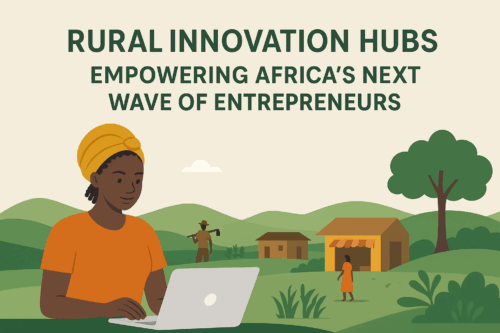
For decades, innovation and entrepreneurship in Africa have been perceived as an urban phenomenon — centered in bustling cities like Accra, Nairobi, and Lagos. However, a quiet revolution is underway across the continent. In villages and small towns, rural innovation hubs are emerging as powerful engines of creativity, entrepreneurship, and local economic growth.
These hubs are doing more than providing workspaces; they are redefining the future of rural development by equipping youth with digital skills, access to funding, and the confidence to build businesses that respond to local challenges. As governments, NGOs, and investors increasingly turn their attention to rural communities, the next wave of African innovation may not come from cities — but from the countryside.
What Are Rural Innovation Hubs?
Redefining Entrepreneurship Beyond Cities
A rural innovation hub is a community-centered ecosystem designed to foster entrepreneurship, digital literacy, and small business development in rural areas. These hubs serve as incubators, training centers, and co-working spaces, helping local innovators transform challenges — from agriculture to renewable energy — into business opportunities.
In essence, rural innovation hubs act as connectors, linking rural talent to markets, mentors, and investors. By doing so, they close the innovation gap between urban and rural areas, ensuring that no community is left behind in Africa’s digital transformation.
Empowering Rural Youth Through Digital Skills
Bridging the Skills and Opportunity Gap
One of the most transformative impacts of rural innovation hubs is digital empowerment. Many African rural youth have the creativity and determination to build solutions — but lack the tools and skills to make them real.
Through initiatives supported by organizations such as GIZ Ghana, UNDP, Mastercard Foundation, and Ashesi Design Lab, young entrepreneurs are gaining access to training in coding, design thinking, financial literacy, and agritech.
For instance, programs under MEST Africa and the Rural Youth Employment Program (RYEP) equip young people with both digital and business skills — turning potential job seekers into job creators.
This model doesn’t just teach technology; it teaches self-reliance, enabling youth to innovate within their own communities instead of migrating to urban centers.
Co-Working and Training Centers
Transforming Local Economies
In places once overlooked by investors, co-working and training centers are now igniting local economies. These shared spaces provide access to the internet, business resources, and peer collaboration — allowing entrepreneurs to reduce costs and increase productivity.
A young agripreneur in Tamale can now collaborate with a designer in Accra or a digital strategist in Nairobi — all from a rural hub equipped with high-speed internet. These centers also host workshops on sustainable farming, e-commerce, and renewable energy, ensuring that innovation remains relevant to local economic realities.
Access to Micro-Funding
Fueling Small Business Growth
Access to finance remains one of the biggest barriers for rural entrepreneurs. To bridge this gap, rural innovation hubs are connecting founders with micro-funding programs, impact investors, and community savings groups.
Initiatives backed by the Tony Elumelu Foundation, Venture Capital Trust Fund, and Impact Investing Ghana are creating pathways for small business owners to secure the seed funding they need to scale.
These programs often emphasize microfinance, crowdfunding, and inclusive capital models, making it easier for women and youth-led startups to thrive.
Public-Private Partnerships
Driving Rural Entrepreneurship
The growth of rural innovation hubs is not a solo effort — it’s the product of strong collaboration between the public and private sectors. Governments, local NGOs, and corporate partners are investing in these hubs to expand economic inclusion.
Partnerships involving GIZ, NEIP (National Entrepreneurship & Innovation Programme), and Ashesi University demonstrate how public-private cooperation can unlock talent at the grassroots level.
Through these alliances, rural entrepreneurs gain access to mentorship, business registration support, and access to national innovation competitions.
Case Studies: Successful Rural Innovation Hubs and Their Impact
Across Africa, numerous rural innovation hubs are transforming communities.
In Ghana, GIZ-supported programs are helping young people in rural regions develop climate-smart agribusinesses.
In Nigeria, the Tony Elumelu Foundation continues to empower thousands of rural startups through its entrepreneurship program.
And in Kenya, community hubs are turning traditional artisans into global e-commerce sellers through digital training.
Each of these hubs tells a powerful story of resilience, creativity, and impact — proving that innovation doesn’t require skyscrapers or city lights to thrive.
The Role of NGOs and Government
Scaling Rural Startups
Governments and NGOs are playing an essential role in scaling rural entrepreneurship.
From providing funding and infrastructure to developing pro-youth policies, they are creating enabling environments for local innovation.
Organizations such as UNDP Ghana, GIZ, and the Mastercard Foundation have launched numerous programs focused on capacity building, incubation, and access to markets. These initiatives ensure that promising ideas in rural areas are nurtured and not lost due to lack of resources.
Digital Inclusion
Bridging the Urban-Rural Tech Divide
Perhaps the most critical impact of rural innovation hubs is digital inclusion.
By extending internet access, digital tools, and online learning platforms to remote communities, these hubs are helping bridge Africa’s urban-rural tech divide.
Farmers now use mobile platforms to access market prices; local artisans sell their crafts online; and rural youth engage with digital freelancing platforms. These are tangible steps toward an inclusive digital economy.
Investment Opportunities and the Road Ahead
Unlocking the Potential of Africa’s Rural Entrepreneurs
Africa’s rural regions are brimming with untapped entrepreneurial potential. As innovation hubs continue to expand, they are drawing the attention of impact investors, venture funds, and development finance institutions that recognize the economic and social value of inclusive entrepreneurship.
The next phase of rural innovation will depend heavily on sustained investment, policy alignment, and capacity building. Governments must ensure that funding programs like the Ghana Enterprise Agency (GEA) and NEIP prioritize rural innovators, while private investors and global partners provide mentorship, access to markets, and technology infrastructure.
By connecting agriculture, renewable energy, ICT, and creative industries, rural innovation hubs can become self-sustaining ecosystems that attract both domestic and foreign capital. This approach not only generates employment but also strengthens local economies through sustainable value chains and digital entrepreneurship.
Community Empowerment Through Collaboration
The Power of Local Networks
Rural innovation thrives on collaboration and community trust. Unlike urban accelerators, these hubs rely on deep relationships with farmers, artisans, youth groups, and local leaders. By embedding innovation within the social fabric of rural communities, these hubs create an environment where people see entrepreneurship as a collective journey, not an individual competition.
Partnerships with entities such as Ashesi Design Lab, Mastercard Foundation, and MEST Africa are further strengthening this ecosystem. They bring mentorship, design-thinking methodologies, and global exposure to young innovators who would otherwise be excluded from mainstream entrepreneurship conversations.
Through community-driven innovation, the next generation of African entrepreneurs will be grounded in purpose, sustainability, and shared growth.
Why Rural Innovation Matters for Africa’s Future
Driving Inclusive and Sustainable Growth
Africa’s economic growth will not be sustainable if rural communities are left behind.
Currently, over 60% of Africa’s population lives in rural areas — meaning that unlocking rural innovation is critical for achieving inclusive growth and reducing unemployment.
Rural innovation hubs offer a model for grassroots economic transformation. They empower local entrepreneurs to address pressing issues like climate resilience, waste management, and agricultural productivity using technology and social innovation.
Moreover, these hubs contribute directly to several UN Sustainable Development Goals (SDGs) — including quality education, decent work, gender equality, and reduced inequalities. They are, in essence, local solutions to global challenges.
Challenges Ahead — And How to Overcome Them
Building Resilient Rural Ecosystems
Despite their promise, rural innovation hubs face notable challenges. Many still struggle with unreliable internet connectivity, limited funding, and lack of long-term sustainability models.
Additionally, some rural youth remain unaware of these opportunities due to inadequate outreach and mentorship networks.
To overcome these challenges, stakeholders must:
- Expand digital infrastructure through partnerships with telecoms and tech firms.
- Enhance financial inclusion by integrating microfinance, crowdfunding, and community investment platforms.
- Build resilient ecosystems that connect local innovators to regional and international markets.
The goal is not merely to create temporary programs but to establish long-lasting innovation pipelines that continuously empower future generations.
Final Thoughts: Building the Future from the Ground Up
The story of rural innovation in Africa is still being written — and it’s one of hope, resilience, and opportunity. From the cocoa farms of Ghana to the farmlands of Kenya, young entrepreneurs are proving that innovation is not defined by geography but by vision and determination.
Rural innovation hubs are not just changing how people work; they are changing how people live — creating jobs, strengthening communities, and building a more inclusive digital economy.
If Africa is to achieve true transformation, the journey must start at the grassroots — where creativity meets necessity and where the seeds of innovation are planted in the soil of everyday life.
Conclusion: The Future of Rural Innovation
The rise of rural innovation hubs represents more than a development strategy — it’s a movement toward inclusive innovation and equitable growth.
When equipped with the right tools, networks, and funding, Africa’s rural youth can lead the continent’s next entrepreneurial revolution.
The future of innovation in Africa will not be built solely in tech parks or capital cities — it will be cultivated in villages, small towns, and rural communities where creativity meets opportunity.