Voice-First Technology and Vernacular AI: Redefining Accessibility in Africa








The Voice Revolution in Africa
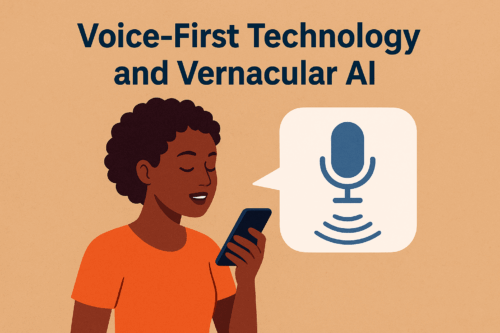
Across Africa, technology is undergoing a quiet but powerful transformation. With over 2,000 languages spoken across the continent, text-based digital systems have often excluded large segments of the population. But now, a new wave of voice-first technology and vernacular AI is breaking down those barriers — enabling people to interact with devices and applications simply by speaking their native languages.
From rural farmers seeking agricultural advice to students learning through localized education platforms, voice-enabled AI is redefining accessibility. By combining speech recognition, natural language processing (NLP), and machine learning, vernacular AI is empowering millions of Africans to connect, learn, and grow — regardless of literacy or linguistic background.
What Is Vernacular AI?
Definition and Concept
Vernacular AI refers to artificial intelligence systems that understand, process, and respond in local or native languages. Unlike English-only AI models, vernacular AI bridges linguistic gaps by enabling natural conversations in African languages like Swahili, Twi, Yoruba, or Hausa.
These models are built using natural language processing (NLP) — the branch of AI that allows computers to interpret human language. When paired with speech recognition, they become powerful tools for human-computer interaction in communities where literacy or English proficiency may be limited.
Organizations such as Veezoo, Ghana NLP, and the Masakhane NLP community are developing localized AI models that ensure Africa’s linguistic diversity is represented in the global AI ecosystem.
How Voice-First Technology Is Redefining Accessibility
Speaking Instead of Typing
In many African communities, oral communication is more natural and prevalent than written text. Voice-first technology allows users to speak directly to devices for search, payments, and education — eliminating the need for typing or reading complex menus.
Real-World Impact
Initiatives such as Google AI Africa, Mozilla Common Voice, and the African Institute for Mathematical Sciences (AIMS) are at the forefront of creating voice datasets for African languages. These projects enable developers to build inclusive apps, from voice assistants to automated helplines, improving digital accessibility for millions.
Breaking the Language Barrier
Local-Language Voice Assistants
Vernacular AI is giving rise to local-language chatbots and voice assistants that serve users in their mother tongues. These assistants provide real-time translations, customer support, and navigation — all in languages people actually speak daily.
Business and Social Applications
Financial institutions, telecom companies, and governments are increasingly using vernacular AI for customer engagement and public service delivery. From Yoruba-speaking mobile banking bots in Nigeria to Swahili-speaking government helplines in Kenya, the technology is creating more inclusive digital experiences.
Empowering Key Sectors Through Voice Tech
Agriculture
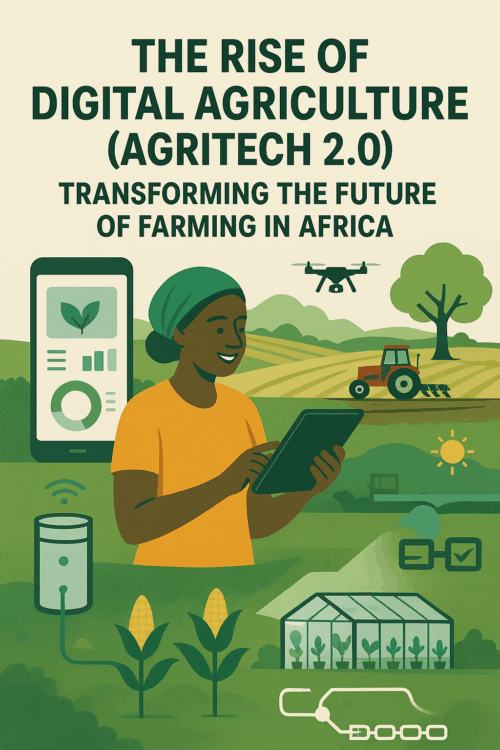
Farmers across Africa are benefiting from voice-guided advisory platforms that deliver crop, weather, and pest management information in native languages. These tools help smallholder farmers make informed decisions and boost productivity without requiring literacy.
Education
In education, vernacular AI supports localized e-learning platforms that teach in native languages, improving comprehension and engagement. Students can interact with voice-based tutors and pronunciation assistants powered by speech-to-text AI.
Healthcare
In healthcare, voice assistants and vernacular chatbots are being used for public health campaigns, medical guidance, and appointment scheduling. Voice-driven health lines are bridging gaps between rural patients and medical professionals.
Opportunities for Startups
African Language Models
Africa’s linguistic diversity presents a massive opportunity for AI startups developing African language models. There is growing demand for tools that can process speech in low-resource languages, and innovators are building products for communication, commerce, and education.
Open-Source Collaboration
Projects such as Masakhane NLP and Mozilla Common Voice are leading collaborative efforts to create open, multilingual speech datasets. These open-source resources allow entrepreneurs and developers to build voice-first applications faster and more affordably.
Preserving Indigenous Languages and Cultures
AI for Language Preservation
Beyond business, vernacular AI is a powerful tool for preserving indigenous languages. By digitizing languages that are disappearing, AI ensures future generations can learn, speak, and engage with their cultural heritage.
Cultural Value
Platforms powered by AI-powered translation tools and speech recognition are helping record oral traditions, folklore, and proverbs. Initiatives like DeepMind’s African language research and Ghana NLP projects are preserving both language and identity in digital form.
Partnerships Driving Vernacular AI
Tech–Linguistic Collaboration
The success of vernacular AI relies on collaboration between tech companies and linguistic institutions. Partnerships such as Google AI Africa’s work with AIMS, or Masakhane’s collaboration with Mozilla Common Voice, demonstrate how collective efforts can accelerate innovation in underrepresented languages.
Ethical and Inclusive AI Development
Responsible AI development ensures that language datasets are ethically sourced and inclusive. Engaging local communities in data collection guarantees that models accurately represent accents, dialects, and cultural nuances.
Challenges in Low-Resource Language Development
Data Scarcity and Dialect Diversity
Developing speech recognition for African languages is complex due to limited training data, dialect variations, and code-switching between local and colonial languages. Many languages lack standardized spelling, complicating text-based AI training.
Technical and Ethical Barriers
Challenges also include infrastructure limitations, funding shortages, and data privacy concerns. Overcoming these barriers requires collaboration between governments, academia, and the private sector to build sustainable AI ecosystems.
Future Trends in Vernacular AI
From Chatbots to Smart Agriculture Guides
The next phase of vernacular AI includes smart agriculture guides, voice-driven marketplaces, and multilingual chatbots capable of serving millions. These innovations will extend the reach of technology to rural and underserved populations.
Toward Inclusive AI Ecosystems
The future of AI in Africa is multilingual, inclusive, and localized. As language models improve, they will power smart devices, digital learning platforms, and government services that communicate naturally in every African language.
Toward an Inclusive Digital Future
Voice-first technology and vernacular AI are redefining what accessibility means in Africa. By giving people the ability to use technology in their native languages, AI is not only bridging digital divides but also preserving culture and identity.
As more startups, researchers, and institutions collaborate, Africa stands at the forefront of a global movement — one that proves innovation is most powerful when it speaks the people’s language.
The Economic Impact of Vernacular AI in Africa
While vernacular AI is often discussed in terms of accessibility and inclusion, its economic potential is equally transformative. By enabling people to transact, learn, and access services in their preferred languages, voice-first technologies are unlocking new markets and revenue streams.
Expanding the Digital Economy
Millions of Africans who were previously excluded from digital participation due to language or literacy barriers can now engage in online banking, e-commerce, and e-learning. Voice-first interfaces empower small businesses to reach customers through voice commerce — a growing trend that could redefine mobile marketing in Africa.
Driving Job Creation and Local Innovation
The demand for AI linguists, data labelers, and voice dataset curators is creating new job opportunities across the continent. Young developers, especially from non-English-speaking backgrounds, are now contributing to open-source NLP projects such as Masakhane NLP and Mozilla Common Voice.
As startups localize products for African markets, there is a surge in innovation around speech-to-text, translation, and conversational AI, all built by Africans for Africans.
Policy and Governmental Support for Language Technology
Promoting Inclusive AI Policies
For vernacular AI to thrive sustainably, policy frameworks must encourage data sharing, open-source collaboration, and ethical AI development. Governments can play a major role by funding linguistic research, supporting AI startups, and integrating voice-first technology into public services.
Countries such as Ghana, Kenya, and South Africa are already exploring national AI strategies that emphasize multilingual inclusion. This approach not only promotes innovation but also ensures that the benefits of AI extend to every citizen — from rural communities to urban centers.
Collaboration With Educational Institutions
By integrating language technology research into university programs, institutions can help build the next generation of AI engineers and linguists. Programs like those at the African Institute for Mathematical Sciences (AIMS) serve as examples of how academia can foster AI capacity-building at scale.
Ethical Considerations and Community Engagement
Protecting Cultural Identity
As AI learns to speak African languages, it must also respect the cultural contexts embedded within them. Developers must avoid biases or oversimplifications that could distort meaning or erase local idioms.
Community-Led Data Collection
True inclusion comes when communities participate in creating the technology that serves them. Initiatives like Mozilla Common Voice rely on volunteer contributions to record and validate speech data — ensuring the models represent real accents, tones, and dialects.
By making communities co-creators of AI, Africa can ensure that its languages and stories are preserved authentically in the digital age.
The Future of Vernacular AI — A Connected and Inclusive Africa
Looking ahead, voice-first technology will not just be a convenience — it will become a foundation for Africa’s digital economy. Imagine farmers receiving instant voice alerts about rainfall, students learning science in their native languages, or patients accessing health information through voice chat in remote areas.
The convergence of vernacular AI, IoT (Internet of Things), and mobile connectivity could lead to fully voice-enabled ecosystems — where every African can access digital tools naturally, without the need to type or translate.
Global companies like Google AI Africa and DeepMind are already exploring localized speech models, while regional innovators like Ghana NLP and Veezoo continue to pioneer solutions built for African realities.
Building the Next Generation of African AI Innovators
The story of vernacular AI in Africa is also the story of a new generation of innovators — young Africans who are not just consumers of technology but creators of it. Across universities, tech hubs, and AI communities, developers are building tools that reflect the continent’s linguistic richness and cultural depth.
Initiatives like Masakhane NLP embody the spirit of “Ubuntu” — collaboration, inclusion, and shared progress. Volunteers from across Africa are contributing to language datasets, training models, and publishing research papers that challenge global biases in AI.
This movement shows that Africa’s future in artificial intelligence will not depend solely on imported technologies but on homegrown talent that understands the nuances of the continent’s languages and needs. By empowering this new generation, Africa can shape a technology landscape that truly speaks for its people.
You can also read on: https://baobabentrepreneur.com/smart-impact-and-social-innovation-dr-prince-kofi-kludjeson-at-the-ghana-social-enterprise-forum-2025/
Global Recognition and the Path Forward
The work being done across Africa is attracting global attention. Major technology companies such as Google AI Africa, DeepMind, and Mozilla are partnering with African researchers to enhance language technology. These collaborations demonstrate that vernacular AI is no longer a niche pursuit but a critical component of global digital inclusion.
As the world moves toward voice-driven interfaces and conversational ecosystems, African languages must be part of that evolution. The next decade will likely see an explosion of vernacular AI applications — from mobile voice banking and voice-guided agriculture to localized chatbots for public service delivery.
To sustain this growth, investment in infrastructure, research funding, and education will be key. Encouraging governments and private institutions to prioritize AI for local languages will ensure the momentum continues.
Final Thought — When Technology Learns to Listen, Humanity Moves Forward
Africa’s languages are more than tools of communication — they are vessels of culture, identity, and wisdom. For too long, technology has favored a few dominant languages, leaving millions unheard. But with the rise of voice-first technology and vernacular AI, that narrative is changing.
When technology learns to listen in every language, it becomes more human. It connects people not through code or screens, but through the power of their own voices.
The future of Africa’s digital revolution will not just be written — it will be spoken, sung, and shared in every dialect, accent, and tongue across the continent. Vernacular AI is not simply about convenience; it is about inclusion, dignity, and the right to be understood.
In the end, Africa’s greatest innovation may not be a machine that speaks — but a machine that listens
Conclusion — A Future Where Technology Speaks Every Language
The rise of voice-first and vernacular AI marks a new era of digital inclusion, innovation, and empowerment in Africa. By enabling communication in local languages, this technology doesn’t just enhance accessibility — it amplifies culture, identity, and opportunity.
For entrepreneurs, researchers, and policymakers, the message is clear: the future of AI in Africa must be multilingual, inclusive, and community-driven. Investing in language data, open collaboration, and ethical AI systems will ensure that every African voice — from the city to the village — is heard, understood, and valued in the global digital conversation.