ACTIVATE Project: Transforming Agricultural TVET and Youth Employment in Ghana
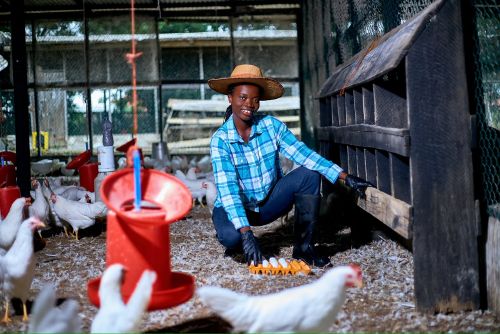

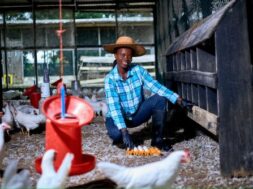



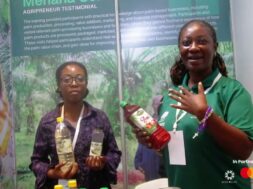
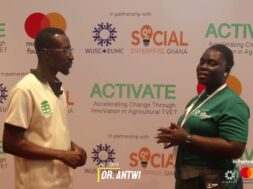
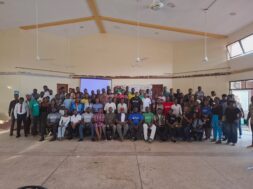


The Accelerating Change Through Innovation in Agricultural TVET (ACTIVATE) Project is working to transform how young people in Ghana see, experience, and participate in agriculture.
Implemented by World University Service of Canada (WUSC) in partnership with the Mastercard Foundation, ACTIVATE is strengthening Agricultural Technical and Vocational Education and Training (ATVET), expanding access to relevant skills, and creating stronger pathways from training to employment and agribusiness.
The project brings together key stakeholders, including Social Enterprise Ghana, the Ministry of Food and Agriculture, the Commission for TVET Ghana, and the Ghana TVET Service, to help build a more inclusive, innovative, and market-responsive Agricultural TVET system.
At its core, ACTIVATE seeks to position agriculture as a modern, profitable, and attractive career pathway for young people, while creating opportunities for young women, Persons with Disabilities (PWDs), refugees, displaced persons, rural youth, and other underserved communities.
Between 2024 and 2025, ACTIVATE reached 58,942 young people through training and outreach initiatives. Young women accounted for 81% of beneficiaries, while 34,824 youth transitioned into work. The project also awarded 515 scholarships, surpassing its annual target.
These results demonstrate the potential of targeted investment in agricultural skills development to improve employment opportunities while strengthening Ghana’s wider agricultural and TVET systems.
What Is the ACTIVATE Project?
ACTIVATE, which stands for Accelerating Change Through Innovation in Agricultural TVET, is a nationwide project being implemented in Ghana from 2024 to 2028.
The project was developed in response to persistent challenges within Agricultural Technical and Vocational Education and Training. While agriculture remains an important part of Ghana’s economy and provides livelihoods for a significant proportion of the population, many young people continue to face barriers when attempting to gain the skills, experience, financing, and market connections needed to succeed in the sector.
ACTIVATE takes a systems-strengthening approach. Rather than focusing only on training individual beneficiaries, the project seeks to improve the institutions, curricula, instructors, policies, industry relationships, and employment pathways that shape Agricultural TVET in Ghana.
The ultimate goal is to improve the well-being, incomes, and resilience of 79,360 young women and men through market-relevant agricultural skills development and viable employment pathways.
Why Agricultural TVET Matters for Ghana
Agriculture plays a critical role in Ghana’s economy. It contributes significantly to national economic activity, supports livelihoods, and remains essential to food security.
However, the agricultural sector is changing.
Technology, climate change, changing consumer demands, digital tools, agribusiness models, and new production methods are creating new opportunities and new skills requirements.
For young people to benefit from these opportunities, agricultural education and training must evolve alongside the sector.
Addressing Skills Gaps in Agriculture
One of the major challenges facing Agricultural TVET is the gap between what students learn and what employers and businesses need.
Outdated training frameworks, limited industry integration, inadequate equipment, and insufficient exposure to real workplace environments can make it difficult for graduates to transition into decent employment or successfully establish businesses.
ACTIVATE is responding by promoting a demand-driven and industry-led Agricultural TVET system.
This means training should not only provide theoretical knowledge. It should equip young people with practical, technical, entrepreneurial, digital, and problem-solving skills that are relevant to real opportunities in agriculture and its associated value chains.
The Three Strategic Pillars of ACTIVATE
ACTIVATE’s approach is built around three major pillars: Agricultural TVET systems strengthening, access to quality and relevant training, and employability and transition to work.
Pillar 1: Strengthening the Agricultural TVET System
The first pillar focuses on improving the institutions and systems that deliver Agricultural TVET.
ACTIVATE supports alignment with national reforms, including:
- Competency-Based Training (CBT)
- Recognition of Prior Learning (RPL)
- Apprenticeship systems
- Institutional modernization
- Technology upgrading
- Institutional branding
- Technical assistance for regulatory bodies
The project is also establishing an Innovation Fund to support localized, industry-driven solutions within Agricultural TVET institutions.
Through this approach, training institutions can explore practical innovations that respond to agricultural challenges and emerging market opportunities.
Pillar 2: Increasing Access to Quality and Relevant Training
Access to training is only meaningful when the training itself is relevant, inclusive, and connected to employment opportunities.
ACTIVATE is therefore supporting the development of curricula that respond to industry requirements while strengthening instructor capacity.
The project also promotes Gender-Responsive and Inclusive Pedagogy (GRIP) to help create learning environments where women, Persons with Disabilities, and other marginalized groups can participate effectively.
Other interventions include:
- Scholarships for disadvantaged and high-potential youth
- Accreditation of programs, trainers, and institutions
- Digital learning
- Climate-smart agriculture training
- Industry-responsive curricula
- Professional development for instructors
These interventions are designed to improve both the quality and relevance of Agricultural TVET.
Pillar 3: Supporting Youth Transition Into Work
Training alone does not guarantee employment.
ACTIVATE therefore places strong emphasis on what happens after training.
The project is establishing Agripreneurship Support Centres (ASCs) to help young people explore and pursue opportunities in agribusiness.
It also facilitates Workplace Experience Learning (WEL) placements, giving young people practical exposure to real working environments.
Additional support includes:
- Career guidance
- Job placement infrastructure
- Business incubation
- Financial grants
- Transition support
- Earn-as-you-Learn models
Together, these interventions aim to create stronger connections between training institutions, employers, agribusinesses, and young people.
ACTIVATE Project Results: 2024–2025
The first two years of implementation have produced significant results, demonstrating the scale and reach of the project.
58,942 Youth Reached Through Training and Outreach
Between 2024 and 2025, ACTIVATE reached 58,942 young people through training and outreach initiatives.
This included:
- 47,824 young women
- 11,118 young men
The high participation of young women demonstrates the project’s strong focus on gender inclusion.
81% of Beneficiaries Are Young Women
Women represent 81% of beneficiaries reached by the project, exceeding the project’s minimum target of 70% participation by women.
This focus is particularly important because young women can face additional barriers to accessing technical training, employment, entrepreneurship opportunities, finance, and productive resources.
By increasing women’s participation in Agricultural TVET, ACTIVATE is helping create pathways for more young women to participate in Ghana’s agricultural economy.
Supporting Persons With Disabilities and Displaced Populations
Inclusion is an important component of ACTIVATE’s approach.
The project reached 739 Persons with Disabilities, comprising 505 females and 234 males.
It also reached 1,201 refugees and displaced persons, including 739 females and 462 males.
These results demonstrate the project’s commitment to ensuring that agricultural skills and employment opportunities reach groups that are often underserved by traditional education and employment systems.
34,824 Youth Transitioned Into Work
One of the most significant results recorded during 2024–2025 is the transition of 34,824 youth into work.
This includes 34,638 female beneficiaries and 186 male beneficiaries.
The employment transition component is central to ACTIVATE’s wider objective of connecting skills development to meaningful economic opportunities.
515 Scholarships Awarded
ACTIVATE awarded 515 scholarships, including:
- 375 scholarships to females
- 140 scholarships to males
These scholarships help reduce financial barriers that can prevent talented young people from accessing Agricultural TVET opportunities.
Strengthening Agricultural TVET Institutions
ACTIVATE’s impact extends beyond individual beneficiaries.
The project is also investing in the institutions responsible for delivering Agricultural TVET.
335 Instructors Trained
A total of 335 instructors have been trained in inclusive and gender-responsive pedagogical delivery.
Strengthening instructors is essential because the quality of training depends heavily on the capacity of educators to deliver relevant, practical, and inclusive learning.
11 Institutions Undergoing Retooling
11 institutions are undergoing retooling, with accessibility upgrades completed at key locations.
Modern equipment and accessible learning environments can help training institutions better prepare young people for contemporary agricultural workplaces.
18 New Modular Short Courses Developed
ACTIVATE has supported the development and official approval of 18 modular short courses.
These include courses focused on areas such as:
- Digital skills
- Climate-smart agriculture
- Emerging agricultural opportunities
The development of modular courses provides opportunities for learners to acquire targeted skills that respond to specific industry and market needs.
Driving Innovation in Agriculture
Innovation is at the heart of ACTIVATE’s approach.
Challenge funds have enabled 11 institutions to launch pilot initiatives focused on agricultural innovation.
Examples include:
- Apiculture
- Aquaponics
- Poultry
These pilots demonstrate how Agricultural TVET institutions can become spaces for experimentation, entrepreneurship, and practical problem-solving.
Rather than treating agriculture as a static sector, ACTIVATE is supporting an approach that encourages institutions and young people to identify new ways of producing, processing, marketing, and adding value to agricultural products.
Technology and Digital Learning in Agriculture
Technology is increasingly shaping the future of agriculture.
ACTIVATE is integrating digital learning and technology into Agricultural TVET while also expanding digital extension services.
Through video-based learning modules, digital extension services have reached more than 2,000 farmers.
Digital tools can help farmers access information and learning resources without relying entirely on traditional face-to-face training.
For young people entering agriculture, digital skills can also create opportunities in areas such as agricultural technology, digital marketing, data management, e-commerce, precision agriculture, and other emerging parts of the agricultural value chain.
Promoting Climate-Smart Agriculture
Climate change presents major challenges to agricultural productivity and rural livelihoods.
ACTIVATE is therefore integrating climate-smart agriculture principles into skills development and training.
This helps prepare young people and agricultural professionals to understand and respond to changing environmental conditions while exploring more sustainable production practices.
Climate-smart skills can contribute to:
- Improved resilience
- Efficient use of resources
- Sustainable agricultural production
- Better adaptation to climate-related risks
- Long-term agricultural productivity
Making Agriculture More Attractive to Young People
For many young people, agriculture has traditionally been viewed primarily as subsistence farming.
ACTIVATE seeks to challenge this perception.
Modern agriculture encompasses much more than crop and livestock production. It includes processing, logistics, marketing, technology, financial services, input supply, mechanization, agritech, food production, and other activities across agricultural value chains.
By combining technical training with entrepreneurship, technology, workplace experience, and business support, ACTIVATE is helping demonstrate that agriculture can provide diverse and profitable career opportunities.
Empowering Young Women Through Agricultural Skills
Gender equality is a central component of the ACTIVATE Project.
The project targets a minimum of 70% participation by women, and the 2024–2025 results show that women already account for 81% of beneficiaries reached.
This focus can help address barriers that have historically limited women’s participation in technical education and agricultural value chains.
Beyond participation numbers, gender-responsive training approaches seek to create learning and employment environments where young women can develop the skills, confidence, experience, and networks needed to succeed.
Creating Opportunities for Rural and Underserved Youth
ACTIVATE also prioritizes rural youth, underserved populations, refugees, and displaced persons.
This is important because opportunities for technical training and employment are not always distributed equally across communities.
Expanding access to relevant Agricultural TVET can help young people in underserved areas build skills that connect them to local and national agricultural value chains.
What Are Agripreneurship Support Centres?
The Agripreneurship Support Centres (ASCs) are an important part of ACTIVATE’s transition-to-work strategy.
The centres are designed to provide support to young people interested in building careers and businesses within agriculture.
Through agripreneurship support, young people can be better positioned to move beyond job seeking and explore opportunities to become entrepreneurs and employers within the agricultural sector.
ACTIVATE plans to fully operationalize 16 Agripreneurship Support Centres during the 2026–2028 period.
ACTIVATE’s Priorities for 2026–2028
The next phase of the project will build on the progress achieved during 2024–2025.
Key priorities include transitioning an additional 32,632 youth into employment and agribusiness.
ACTIVATE also plans to:
- Scale the Innovation Fund to 11 ATVET institutions
- Fully operationalize 16 Agripreneurship Support Centres
- Complete national Competency-Based Training accreditation and institutionalization
- Roll out transition package grants at scale
- Expand Workplace Experience Learning across 25 institutions
- Provide skills training to more than 20,724 additional youth
- Strengthen structured training-to-employment pathways
These priorities are intended to deepen the connection between skills development and economic opportunity.
ACTIVATE’s Contribution to Ghana’s Agricultural Transformation
The ACTIVATE Project goes beyond individual training interventions. Its broader objective is to contribute to systemic change across Ghana’s Agricultural TVET and agricultural sectors.
Youth Employment and Entrepreneurship
By linking training with workplace experience, career guidance, business incubation, grants, and agripreneurship support, ACTIVATE is creating multiple pathways for young people to participate in the agricultural economy.
Food Security and Agricultural Productivity
A more skilled agricultural workforce can contribute to improved production, innovation, value addition, and food systems.
Economic Resilience and Inclusive Growth
Supporting young people—particularly women and underserved populations—can help broaden participation in economic activity and create more inclusive growth opportunities.
A More Modern Agricultural Sector
The integration of digital skills, climate-smart agriculture, innovation, and technology is helping move Agricultural TVET toward the needs of a changing agricultural economy.
Building Stronger Partnerships for Sustainable Impact
ACTIVATE is implemented through a multi-stakeholder partnership model involving government institutions, private-sector actors, agribusinesses, training institutions, and community-level partners.
This collaborative approach is important because sustainable change in Agricultural TVET cannot be achieved by one organization alone.
Government institutions provide policy and regulatory leadership. Training institutions deliver skills development. Private-sector actors provide market and employment connections, while community partners help reach young people where they live and work.
By embedding reforms within national systems, ACTIVATE aims to ensure that improvements continue beyond the project’s implementation period.
Why the ACTIVATE Project Matters for Ghana’s Future
Ghana’s agricultural future will depend increasingly on the ability to combine skills, innovation, technology, entrepreneurship, inclusion, and climate resilience.
Young people are central to this future.
ACTIVATE is helping create the conditions for young women and men to see agriculture not simply as a traditional livelihood, but as a sector filled with opportunities for employment, entrepreneurship, innovation, and professional growth.
The project’s investment in Agricultural TVET institutions is equally important. By improving curricula, training instructors, upgrading institutions, supporting innovation, and strengthening links with industry, ACTIVATE is helping build a TVET system that is better positioned to respond to the needs of Ghana’s agricultural economy.
Frequently Asked Questions About the ACTIVATE Project
What does ACTIVATE stand for?
ACTIVATE stands for Accelerating Change Through Innovation in Agricultural TVET.
What is the ACTIVATE Project in Ghana?
ACTIVATE is a nationwide project focused on transforming Agricultural Technical and Vocational Education and Training, improving access to relevant skills, and creating pathways for young people into employment and agribusiness.
Who implements the ACTIVATE Project?
The ACTIVATE Project is implemented by World University Service of Canada (WUSC) in partnership with the Mastercard Foundation, with collaboration from government institutions, training institutions, private-sector actors, agribusinesses, and community partners.
How long will the ACTIVATE Project run?
The project is being implemented from 2024 to 2028.
How many young people does ACTIVATE aim to support?
The overall goal is to enhance the well-being, incomes, and resilience of 79,360 young women and men through market-relevant agricultural skills development and viable employment pathways.
How many youth has ACTIVATE reached so far?
Between 2024 and 2025, the project reached 58,942 youth through training and outreach initiatives.
How does ACTIVATE support youth employment?
ACTIVATE connects young people to employment and agribusiness opportunities through workplace experience, career guidance, job placement, agripreneurship support, business incubation, transition grants, and other employment-focused interventions.
How does ACTIVATE support women?
The project has a minimum target of 70% female participation. During 2024–2025, women represented 81% of beneficiaries reached.
Does ACTIVATE support Persons with Disabilities?
Yes. Inclusion is an important component of the project, which targets at least 5% participation by Persons with Disabilities and has reached 739 PWDs during 2024–2025.
What is Workplace Experience Learning?
Workplace Experience Learning (WEL) provides young people with opportunities to gain practical experience in real workplace environments, helping bridge the gap between classroom training and employment.
How does ACTIVATE promote innovation?
Through its Innovation Fund and challenge funds, ACTIVATE supports Agricultural TVET institutions to develop and test localized solutions in areas such as apiculture, aquaponics, and poultry.
Conclusion: Building a New Future for Agricultural Skills in Ghana
The ACTIVATE Project represents an important investment in the future of Agricultural TVET, youth employment, and Ghana’s agricultural sector.
With 58,942 youth reached, 34,824 youth transitioned into work, 515 scholarships awarded, 335 instructors trained, and 18 approved modular short courses developed during 2024–2025, the project has already demonstrated significant reach and progress.
But its ambition goes beyond these numbers.
ACTIVATE is working to strengthen the systems, institutions, skills, partnerships, and innovation needed to make agriculture a modern, resilient, inclusive, and profitable sector for Ghana’s youth.
As the project moves through its 2026–2028 priorities, its continued focus on Agricultural TVET reform, youth employment, agripreneurship, digital learning, climate-smart agriculture, gender equality, and inclusion has the potential to contribute significantly to Ghana’s long-term economic and agricultural transformation.
The future of agriculture will require a new generation of skilled, innovative, and entrepreneurial young people. ACTIVATE is helping build the pathways that can connect Ghana’s youth to that future.