Agribusiness e-Academy Road Tour Heads to Malawi: Empowering the Next Generation of Agripreneurs









From Accra to Lilongwe
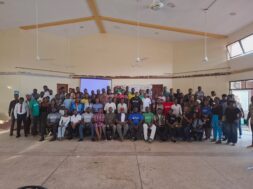
In 2024, the Agribusiness e-Academy Road Tour made its debut in Ghana, reaching hundreds of young people with a vision of transforming Africa’s agricultural landscape through digital learning. The initiative was hailed as a groundbreaking platform, equipping students with practical knowledge and resources to venture into agribusiness.
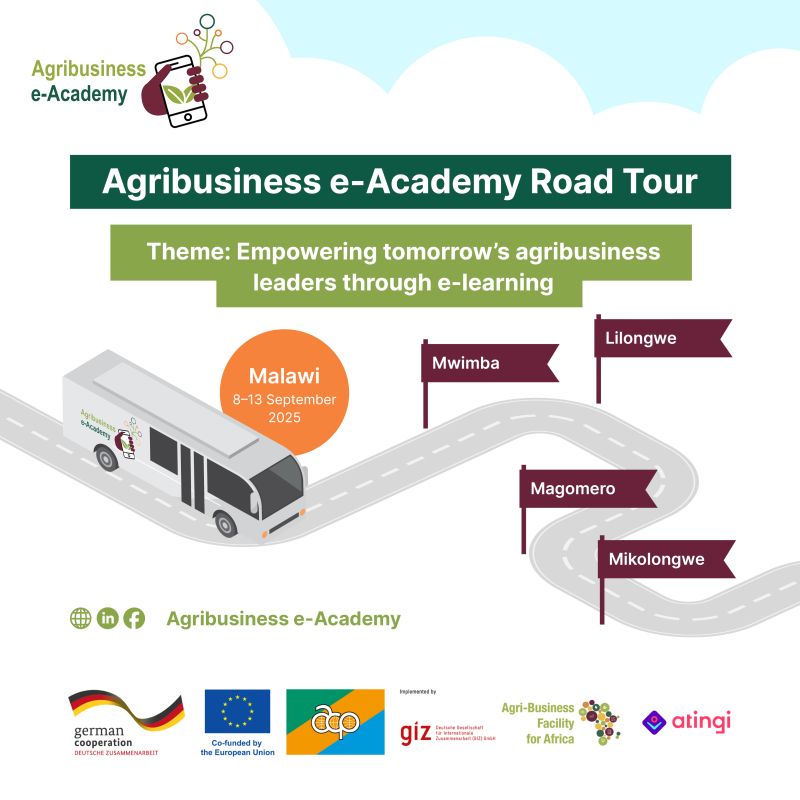
Now, the road tour is expanding beyond Ghana. From September 8–13, 2025, the Agribusiness e-Academy Road Tour heads to Malawi, continuing its mission of empowering youth with the skills, confidence, and tools needed to thrive as future agripreneurs.
This move signals a bold step in scaling access to agribusiness training across Africa.
About the Agribusiness e-Academy
The Agribusiness e-Academy is a digital learning hub designed to provide free, self-paced, and self-tutored courses in agribusiness. Its purpose is to democratize access to agricultural education by removing barriers such as cost, distance, and limited training infrastructure.
Through engaging online content, the e-Academy equips young people with the skills to manage farms, launch agribusiness ventures, and adopt sustainable practices. By focusing on self-directed learning, it empowers students to build knowledge at their own pace, preparing them for a competitive and evolving sector.
Theme of the Road Tour
The 2025 Malawi edition is anchored on the theme: “Empowering tomorrow’s agribusiness leaders through e-learning.”
This theme reflects the critical role of digital education in shaping the next wave of entrepreneurs. In an era where agriculture faces challenges such as climate change, food security, and market access, e-learning emerges as a flexible and inclusive solution.
For Africa’s youth, who make up the largest share of the continent’s population, digital training opens doors to skills development, innovation, and entrepreneurial opportunities in agriculture.
Tour Itinerary: Malawi 2025
The Malawi road tour will take place from September 8 to 13, 2025, covering four key academic institutions:
- Mwimba College of Agriculture
- Lilongwe University of Agriculture and Natural Resources (LUANAR)
- Magomero Training College
- Mikolongwe Vocational School
At each stop, the program will combine awareness sessions, demonstrations of the e-Academy platform, and interactive engagements with students. Participants will be introduced to digital courses that sharpen their skills in agribusiness management, entrepreneurship, and sustainable agriculture.
Partnerships and Implementation
Key Stakeholders
The initiative is driven by the Agri-Business Facility for Africa (ABF), a program dedicated to strengthening agribusiness capacities across the continent.
Implementation is spearheaded by GIZ (Deutsche Gesellschaft für Internationale Zusammenarbeit), an organization with a longstanding track record of supporting sustainable development.
Support Network
The road tour is made possible through collaboration with:
- German Cooperation
- European Union (EU)
- African, Caribbean, and Pacific (ACP) Group of States
A crucial partner in this initiative is the Atingi digital learning platform, which powers the Agribusiness e-Academy. Atingi ensures that courses remain accessible online, user-friendly, and tailored to the African context.
You can also read on https://baobabentrepreneur.com/celebrating-creative-vision-meet-the-five-selected-voices-of-the-giz-ghana-art-competition/:
Impact on Youth and Agripreneurship
The Malawi road tour is expected to deliver meaningful impact in three key areas:
- Skills Development
Students gain practical skills in agribusiness planning, value chain management, and sustainable agriculture. - Capacity Building
The program builds confidence and knowledge among young people, positioning them as active contributors to Africa’s agribusiness sector. - Future Agripreneurs
By promoting self-paced online learning, the initiative nurtures a generation of innovators and problem-solvers ready to tackle agricultural challenges with creativity and technology.
Ultimately, the road tour will not only provide knowledge but also inspire students to see agribusiness as a viable and profitable career path.
Looking Ahead
The Malawi edition of the road tour represents more than just a local event—it is part of a broader movement to scale agribusiness training across Africa.
By leveraging digital tools, strategic partnerships, and youth-focused programs, the Agribusiness e-Academy is setting the foundation for long-term growth in sustainable agriculture.
Looking forward, there are opportunities to replicate the success of the Ghana and Malawi tours in other countries, ensuring that more young people across Africa can benefit from free online agribusiness courses and innovative learning solutions.
Why Malawi Matters for Agribusiness Growth
Malawi, often referred to as the “Warm Heart of Africa,” is a country where agriculture contributes significantly to both employment and GDP. Despite this, the sector faces challenges such as limited access to training, inadequate technology adoption, and vulnerability to climate change.
By bringing the Agribusiness e-Academy Road Tour to Malawi, organizers are addressing these gaps head-on. The tour’s goal is to showcase how digital education can strengthen resilience, enhance productivity, and create pathways for young people to see agriculture as a profitable enterprise, not just subsistence farming.
This is especially critical as Malawi’s youth population grows rapidly. Providing young people with innovative tools and accessible training ensures they are well-prepared to lead the country’s agribusiness future.
The Role of E-Learning in Agribusiness Transformation
E-learning has become a game-changer across many sectors, and agriculture is no exception. The Atingi digital learning platform, which powers the e-Academy, bridges the gap between knowledge and opportunity.
Key Benefits of E-Learning for Agripreneurs:
- Accessibility: Students can access content anytime and anywhere, even in rural areas.
- Affordability: Courses are completely free, reducing barriers to quality education.
- Flexibility: Learners set their own pace, making it possible to balance studies with work or farming.
- Relevance: Modules are designed around Africa’s unique agricultural challenges and opportunities.
For Malawi’s next generation of agripreneurs, this approach ensures that skills are not just theoretical but practical, adaptable, and action-oriented.
Voices from the Road: Student and Partner Perspectives
Although the Malawi tour is just beginning, feedback from Ghana’s 2024 edition provides insights into its potential. Students in Ghana reported that the road tour introduced them to new concepts such as agribusiness value chains, digital marketing for farm products, and sustainable practices they had never encountered before.
For Malawi, similar enthusiasm is expected. Students at institutions like LUANAR and Mwimba are eager to learn how technology and entrepreneurship intersect with agriculture.
Development partners, such as the European Union and German Cooperation, have emphasized that empowering youth through education is not just about employment—it is about driving economic transformation and food security across Africa.
Agribusiness as a Pathway to Employment and Innovation
Africa’s agriculture sector is projected to become a $1 trillion industry by 2030. However, realizing this potential depends heavily on equipping youth with the right skills and mindset.
Through the e-Academy, young people in Malawi will learn to:
- Identify profitable agribusiness opportunities.
- Adopt climate-smart agricultural practices.
- Apply business management principles to farming.
- Leverage digital tools for marketing and scaling their ventures.
These lessons help position agriculture not just as a means of survival, but as a dynamic sector ripe for innovation, investment, and growth.
Long-Term Vision: Scaling Across Africa
The Malawi tour is part of a broader roadmap to expand the Agribusiness e-Academy to more African countries in the coming years. With the success in Ghana and the anticipated impact in Malawi, there is growing potential for replication in East, West, and Southern Africa.
Future plans could see partnerships with universities, agritech startups, and farmer cooperatives across the continent. By scaling strategically, the initiative has the power to build a continent-wide community of skilled agripreneurs, all connected through digital learning.
Final Reflection
The Agribusiness e-Academy Road Tour in Malawi (September 8–13, 2025) is more than an event—it is a vision for Africa’s agricultural transformation. With support from GIZ, ABF, German Cooperation, the EU, ACP, and the Atingi platform, the initiative is equipping youth with the digital skills needed to thrive in a rapidly changing agribusiness landscape.
From Accra to Lilongwe, this journey reflects a shared belief: that Africa’s future lies in the hands of its youth, and with the right tools, they can reimagine agriculture as a sector of opportunity, innovation, and sustainability.
As we look ahead, the road tour is a reminder that empowering young agripreneurs through e-learning is not just about education—it is about shaping Africa’s tomorrow.
Spotlight on Malawi’s Academic Institutions
The selection of Mwimba, LUANAR, Magomero, and Mikolongwe as key stops during the road tour is intentional. These institutions represent the diversity of Malawi’s agricultural education landscape, from higher education to vocational training.
- Mwimba College of Agriculture specializes in crop science and soil management, making it ideal for introducing sustainable practices to future farmers.
- LUANAR (Lilongwe University of Agriculture and Natural Resources) is the country’s premier institution for agricultural innovation and research, a fitting stage to launch e-learning solutions for the next generation.
- Magomero Training College plays a role in community-level capacity building, ensuring rural youth are not left behind in the digital learning revolution.
- Mikolongwe Vocational School emphasizes practical, hands-on skills, aligning well with the e-Academy’s focus on entrepreneurship and applied knowledge.
By engaging these varied institutions, the road tour ensures that the benefits of the Agribusiness e-Academy Malawi 2025 reach students from different educational backgrounds, strengthening inclusivity.
A Catalyst for Sustainable Agriculture in Malawi
Sustainability is a recurring theme in the Agribusiness e-Academy’s curriculum, and for good reason. Malawi, like many African countries, faces the realities of soil degradation, water scarcity, and climate change. Through the road tour, students will gain insights into:
- Climate-smart agriculture techniques that preserve natural resources.
- Agroecology and regenerative farming practices that improve soil health.
- Value chain integration to minimize post-harvest losses.
- Green entrepreneurship opportunities, such as eco-friendly agri-products.
By embedding these themes in the training, the road tour contributes directly to sustainable agriculture in Malawi, preparing students to lead with both profitability and environmental responsibility in mind.
The Role of Partnerships in Scaling Impact
The strength of the Agribusiness e-Academy Road Tour lies in its partnerships. Each organization plays a distinct yet complementary role:
- GIZ provides technical expertise and oversees implementation.
- ABF (Agri-Business Facility for Africa) drives capacity building and regional scaling.
- German Cooperation, the EU, and ACP ensure financial and institutional backing.
- Atingi delivers the digital platform, making the courses widely accessible.
This collaborative model demonstrates how public–private partnerships in agribusiness education can drive large-scale transformation. It is not just about a single road tour, but about building a sustainable ecosystem where knowledge, technology, and youth potential intersect.
Inspiring the Next Generation of Agripreneurs
The heart of the Malawi road tour is its focus on youth empowerment. By equipping students with the right tools, the initiative inspires them to see agriculture as a career of choice rather than a last resort.
Many young Africans still view farming as labor-intensive and outdated. However, through the Agribusiness e-Academy, they will discover the entrepreneurial side of agriculture—agribusiness startups, digital agriculture apps, export opportunities, and agritech innovations.
By shifting mindsets, the road tour has the potential to spark a wave of youth-led agribusiness ventures that contribute to both local communities and regional economies.
Building Resilience for Africa’s Food Security
Food security remains a pressing issue across Africa, and Malawi is no exception. The road tour’s emphasis on capacity building through digital education directly contributes to addressing this challenge.
Students trained through the program can apply their skills to:
- Boost productivity in local farms.
- Develop food processing and storage innovations.
- Improve distribution networks.
- Explore export markets for Malawian agricultural products.
These contributions align with broader development goals, positioning agripreneurs as critical players in securing Africa’s food future.
Connecting Local Narratives to Global Goals
The Agribusiness e-Academy Road Tour in Malawi is not just a local event—it aligns with global development priorities.
- Sustainable Development Goal 2 (Zero Hunger): By empowering youth in agriculture, the initiative supports food security.
- SDG 8 (Decent Work and Economic Growth): Encouraging entrepreneurship in agribusiness creates jobs and promotes innovation.
- SDG 13 (Climate Action): Promoting sustainable and climate-smart agriculture builds resilience to environmental shocks.
This alignment makes the tour a globally relevant initiative, showing how localized programs can contribute to Africa’s participation in global development frameworks.
Beyond 2025: Scaling Lessons Learned
The Malawi edition is not the end—it is a stepping stone for future expansion. Lessons learned during the 2025 road tour will guide the adaptation of the e-Academy model in other regions.
Potential countries for replication include:
- Kenya and Uganda in East Africa, where youth engagement in agriculture is growing.
- Nigeria and Côte d’Ivoire in West Africa, home to large agribusiness markets.
- Zambia and Tanzania in Southern Africa, where sustainable agriculture programs are expanding.
By scaling strategically, the initiative will gradually form a pan-African network of agripreneurs connected by digital learning and empowered through innovation.
Closing Thoughts
The Agribusiness e-Academy Road Tour Malawi 2025 is more than a knowledge-sharing campaign—it is a movement. From the classrooms of Lilongwe to the farms of Mikolongwe, the road tour is equipping youth with skills, confidence, and digital tools to transform agriculture into a sector of opportunity and sustainability.
As Africa looks toward a future where agriculture is not just about feeding populations but also about driving economic growth, this initiative reminds us that the next generation of leaders is already here. They are digital learners, problem-solvers, and agripreneurs ready to take Africa’s agribusiness to the global stage.
Conclusion
The Agribusiness e-Academy Road Tour 2025 in Malawi is a milestone in the journey of empowering Africa’s youth through e-learning. With strong partnerships, digital resources, and a clear focus on the future, the initiative is equipping the next generation of agripreneurs with the tools they need to transform agriculture into a thriving and sustainable sector.
As the road tour moves from Accra to Lilongwe, one thing remains clear: Africa’s agricultural future is in the hands of its youth—and through digital learning, they are ready to lead.
You can see source from: https://www.linkedin.com/posts/giz-ghana_agribusinessacademy-elearning-malawitour-activity-7369985834466508800-d3vY?utm_source=share&utm_medium=member_desktop&rcm=ACoAAFm4MQwB1-_VwoUCm2zHF_yxw6OuJ-P3_zQ