AI-Powered Startups and the Future of Work









How AI Is Revolutionizing Entrepreneurship and the Workplace
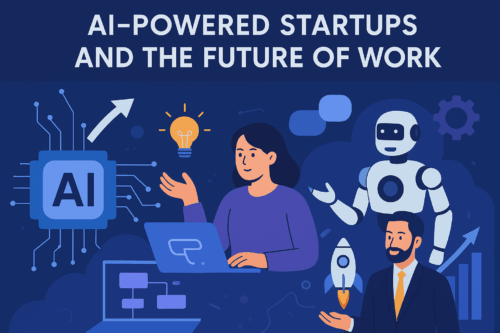
The world of work is evolving faster than ever, driven by the incredible power of artificial intelligence (AI). Across industries, AI is transforming how businesses operate, create value, and compete globally. For entrepreneurs, this is not just a technological shift — it’s a revolution in how startups are built and scaled.
In 2025, AI-powered startups are leading innovation by automating workflows, enhancing decision-making, and improving customer experiences. Whether it’s ChatGPT helping entrepreneurs craft marketing strategies, or Claude and Gemini optimizing customer engagement, AI has become the ultimate co-founder for modern businesses.
The Rise of AI Startups in 2025
The startup ecosystem has seen a surge of AI-driven ventures across sectors like healthcare, marketing, education, and finance. These businesses are leveraging automation, predictive analytics, and generative AI to reduce costs and improve efficiency.
From chatbots handling customer support to AI tools generating ad campaigns, the potential for innovation is limitless. Startups that integrate AI into their core strategy gain a competitive advantage through speed, personalization, and data intelligence — all key factors in the digital economy.
AI Tools Fueling Business Growth
Using ChatGPT, Claude, and Gemini for Startups
Entrepreneurs are increasingly relying on tools like ChatGPT (OpenAI), Claude (Anthropic), and Google Gemini to enhance productivity and creativity. These AI assistants help founders draft business proposals, automate content generation, build chatbots, and analyze market trends.
For small startups with limited teams, AI acts as a virtual employee — managing customer communication, creating social media posts, or generating new business ideas. As a result, businesses can focus on strategy while AI handles routine tasks.
Affordable AI Tools for Small Businesses
Not every entrepreneur has access to large AI budgets, but the rise of affordable AI tools has made technology accessible to all. Platforms like Notion AI, Jasper AI, Copy.ai, and Runway ML empower freelancers and small enterprises to compete with bigger brands.
From designing product images to writing blogs or automating emails, these tools help reduce workload while improving quality. This democratization of AI has created a new wave of digital-first microbusinesses thriving on innovation and efficiency.
AI Applications Across Key Industries
AI in Education
AI is revolutionizing the education sector through personalized learning and smart tutoring systems. Startups are developing platforms that adapt lessons to individual learning styles using AI algorithms.
Tools like Synthesia (for AI video lessons) and Notion AI (for automated study notes) make education more interactive and accessible. Teachers now have access to real-time data insights that help track student progress and deliver customized support.
AI in Marketing
Marketing has seen one of the most dramatic transformations due to AI. Entrepreneurs now use AI to automate ad creation, analyze data, and personalize customer experiences. Tools such as ChatGPT, Jasper AI, Midjourney, and Copy.ai help generate engaging content and visuals in minutes.
AI also enables predictive analytics, allowing businesses to forecast trends and optimize campaigns with precision. The result is faster, smarter marketing that drives conversions while cutting costs.
AI in Healthcare
Healthcare startups are using machine learning and predictive analytics to improve diagnostics and patient engagement. AI-powered solutions help doctors detect diseases early, monitor patient health remotely, and analyze medical data efficiently.
Platforms like IBM Watson and Google DeepMind are leading the charge in medical image recognition and AI-assisted diagnosis. For startups, the opportunity lies in building specialized healthtech solutions for emerging markets where access to quality healthcare is limited.
Transforming Work and Productivity
AI and Remote Work
The rise of remote work has accelerated the need for intelligent collaboration tools. AI now powers virtual assistants that schedule meetings, summarize calls, and automate workflows.
Tools like Slack GPT, Otter.ai, and Zoom AI Companion help teams communicate more effectively, even across time zones. These platforms improve productivity by minimizing repetitive tasks, allowing professionals to focus on creative and strategic work.
Automation and the Future of Employment
As AI continues to advance, the workplace is shifting toward a hybrid model of human-AI collaboration. While automation may replace certain repetitive roles, it is also creating new career paths in AI development, data analysis, and prompt engineering.
To remain relevant, professionals must develop AI literacy, learning how to collaborate with intelligent systems rather than compete against them. The future workforce will be defined by adaptability, creativity, and tech fluency.
Ethical AI and Human Collaboration
As AI becomes more integrated into society, questions of ethics, transparency, and data privacy become increasingly important. Startups must ensure that their AI systems are free from bias and built with fairness in mind.
Responsible AI innovation involves balancing efficiency with empathy — designing solutions that augment human intelligence rather than replace it. The goal is not just to automate work, but to enhance human potential through meaningful collaboration between people and machines.
Startup Opportunities and Funding
Top AI Startup Ideas for 2025 and Beyond
The opportunities for AI entrepreneurship are vast. Some of the most promising ideas include:
- AI-driven healthcare assistants for remote diagnostics.
- Automated content creation platforms for media and marketing.
- AI-powered financial advisors for personal budgeting and investing.
- Smart edtech solutions for personalized learning.
AI startups that address real-world problems — especially in healthcare, education, and sustainability — are likely to attract significant investment in the coming years.
Funding AI Startups in Africa and Beyond
Africa’s AI ecosystem is expanding rapidly, with organizations like Google for Startups, OpenAI Startup Fund, NVIDIA Inception, and AfriLabs providing mentorship and funding.
Entrepreneurs can also explore regional innovation hubs and accelerators that support AI and machine learning ventures. The key to attracting investors is building scalable, ethical, and socially impactful AI solutions.
Preparing for the AI-Powered Future
Artificial intelligence is not just a trend — it’s the foundation of the next industrial revolution. As AI continues to transform industries, startups that embrace these technologies will define the future of innovation and work.
Entrepreneurs, educators, and professionals must prepare by adopting AI tools, learning new skills, and fostering ethical innovation. The most successful leaders of tomorrow will not be those who fear AI, but those who know how to work with it.
AI Trends Redefining the Future of Work
The fusion of artificial intelligence and human creativity is shaping an entirely new kind of workplace — one that is more efficient, flexible, and data-driven. In 2025 and beyond, we can expect a massive transformation across industries as AI continues to evolve.
1. The Rise of AI Co-Workers
AI will no longer be just a tool — it will become a true digital collaborator. Platforms like ChatGPT for Teams, Microsoft Copilot, and Google Gemini Workspace are designed to work alongside humans, managing tasks such as research, content writing, scheduling, and even brainstorming.
This shift means employees will focus more on strategy and innovation while AI handles execution. The future workforce will be defined by how effectively humans collaborate with intelligent systems.
2. Hyper-Personalized Work Environments
AI-driven analytics are enabling organizations to tailor experiences for both employees and customers. From personalized training modules to customized marketing campaigns, AI ensures that every interaction is meaningful and efficient.
This trend extends to the gig economy, where freelancers can now use AI to find jobs that perfectly match their skills, preferences, and past performance data.
3. AI-Powered Decision Making
With the massive amount of data generated daily, businesses need intelligent systems to make sense of it all. Predictive analytics, machine learning models, and real-time dashboards help organizations anticipate market trends, manage resources, and make informed decisions.
Startups that harness these technologies are better equipped to pivot quickly and maintain a competitive edge in fast-changing markets.
Bridging the Skills Gap in an AI-Driven Economy
As AI becomes deeply integrated into business processes, the demand for AI-literate professionals is growing rapidly. Future job seekers and entrepreneurs must be equipped with technical and creative skills that align with this new reality.
Learning AI and Data Literacy
Understanding how AI works — from algorithms to automation — is now essential. Courses on machine learning, prompt engineering, and data analytics are helping professionals stay relevant in an increasingly automated world.
Platforms like Coursera, Udemy, and IBM SkillsBuild offer accessible programs to help bridge this knowledge gap.
The Importance of Soft Skills
While AI can automate logic-based tasks, human skills such as empathy, creativity, and leadership remain irreplaceable. The most successful professionals will be those who can merge emotional intelligence with technical expertise, leading teams through innovation and change.
Continuous Upskilling
The future of work will demand lifelong learning. Companies are already implementing AI-driven training programs that adapt to each employee’s needs and performance level, ensuring steady professional growth.
AI and the Evolution of Entrepreneurship
Entrepreneurship is being redefined by AI, shifting from traditional business operations to automation-first strategies. The ability to start, scale, and manage a company has never been easier.
AI as a Business Partner
Today, an entrepreneur can build an entire company with AI-powered tools:
- ChatGPT or Claude for business planning and content.
- Canva and Midjourney for design.
- Zapier and Notion AI for automation.
- Synthesia or Runway ML for video creation.
These technologies allow startups to operate leanly while delivering professional-quality results. Entrepreneurs can now bring ideas to life with minimal resources and maximum efficiency.
AI-Driven Business Models
New business models are emerging where AI itself becomes the core product or service. Examples include:
- AI-powered SaaS tools for analytics or automation.
- AI consulting firms that help companies integrate smart systems.
- Personalized AI assistants for niche industries like healthcare or real estate.
This innovation wave is giving rise to AI-first entrepreneurship, where the technology drives both vision and execution.
You can also read on: https://baobabentrepreneur.com/leveraging-online-marketplaces-and-e-commerce/
The Ethical Horizon: Building Trust in AI
As AI adoption accelerates, ethics and transparency are becoming major priorities. Trust will be the foundation of future innovation. Companies must focus on:
- Data protection — ensuring that user data is collected responsibly.
- Bias prevention — building inclusive algorithms that serve diverse users.
- Explainable AI (XAI) — allowing people to understand how AI makes decisions.
Entrepreneurs who build ethical AI systems will gain consumer trust and long-term sustainability. Governments and regulators are also developing frameworks to ensure AI technologies align with societal values.
The African Opportunity in AI Innovation
Africa is becoming a hotbed for AI entrepreneurship and innovation. With a young, tech-savvy population and rapid mobile adoption, the continent presents unique opportunities for AI-driven solutions.
Startups are already using AI to solve local challenges:
- Agritech AI for weather prediction and crop optimization.
- Fintech AI for digital lending and fraud detection.
- Healthtech AI for remote diagnosis and medical education.
Funding bodies such as Google for Startups, NVIDIA Inception, and OpenAI Startup Fund are increasingly supporting African founders developing scalable AI solutions that combine innovation with social impact.
Conclusion: Shaping the AI-Powered Future
The AI revolution is not just about technology — it’s about reimagining how we work, learn, and build businesses. Startups that embrace AI are setting new standards for speed, precision, and personalization. Meanwhile, professionals who develop AI skills and adopt lifelong learning will thrive in an era defined by intelligent automation.
As we move forward, the question isn’t whether AI will change the future of work — it already has. The real question is: how will you adapt, innovate, and lead in this new world of intelligent collaboration?