Green & Sustainable Businesses: Opportunities, Trends & Challenges in 2025
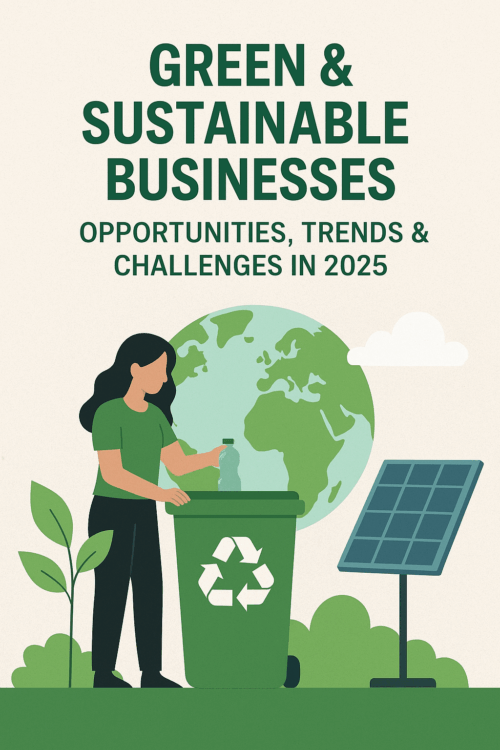










The rise of green and sustainable businesses marks one of the most important global shifts in entrepreneurship. As climate change, waste reduction, and renewable energy continue to dominate global priorities, the demand for eco-friendly business solutions is stronger than ever. In 2025, sustainability is no longer just an ethical choice—it is a profitable business opportunity. Entrepreneurs in Ghana, Africa, and around the world are discovering that going green offers long-term growth, loyal customers, and access to global funding opportunities.
Recycling Businesses
Profitability & Impact
Recycling is both an impact-driven and profitable business idea. With the rise of circular economy initiatives, waste is now seen as a valuable resource. Entrepreneurs who turn plastics, paper, glass, or e-waste into usable products can build sustainable enterprises while solving environmental problems.
Types of Recycling Ventures
- Plastic recycling into pellets or construction materials
- Paper recycling for packaging and stationery
- Glass recycling into bottles, décor, or tiles
- E-waste recycling for electronics and valuable metals
- Upcycling crafts such as bags, furniture, and art pieces
Business Models
Recycling businesses can thrive through individual collection networks, community recycling hubs, or B2B partnerships with industries generating bulk waste.
Creative Recycling Ideas
Entrepreneurs are also innovating with eco-products—for example, turning old tires into furniture or discarded plastics into fashion accessories.
Funding Opportunities
Green entrepreneurs can access eco-grants, government incentives, and global green funds from organizations like UNEP and local NGOs supporting sustainable initiatives.
Eco-Friendly Packaging Businesses
Rising Demand for Sustainable Packaging
With single-use plastics being phased out in many regions, demand for eco-friendly packaging is soaring. Restaurants, supermarkets, and e-commerce platforms are actively seeking green alternatives.
Popular Materials
Biodegradable plastics (PLA), bamboo packaging, recyclable paper, and plant-based materials are now leading the market.
Entrepreneurship Opportunities
- Manufacturing biodegradable packaging materials
- Reselling eco-packaging to SMEs and startups
- Supplying restaurants, supermarkets, and online shops with sustainable packaging
Eco-packaging is one of the fastest-growing green business ideas for 2025, offering both local and export potential.
Solar Energy Solutions
Why Solar is in Demand
Across Africa and many emerging markets, solar energy solutions are essential due to rising electricity prices and unreliable power grids. Solar power is not only sustainable but also cost-effective for households and small businesses.
Business Opportunities in Solar
Entrepreneurs can explore:
- Solar panel installation and maintenance
- Selling solar-powered gadgets like lamps, cookers, and chargers
- Providing solar systems for schools, SMEs, and rural households
Financing & Partnerships
Green startups in solar can leverage leasing options, pay-as-you-go models, or NGO partnerships to make solar solutions affordable. Government incentives and tax breaks also support solar entrepreneurship in 2025.
Building a Green Brand
Eco-Friendly Branding & Certifications
Building a trustworthy green business requires credibility. Certifications such as B Corp, Fair Trade, Energy Star, and ISO eco-labels help businesses prove their environmental commitment.
Marketing Green Businesses
Consumers today want transparency. Entrepreneurs can leverage:
- Storytelling about sustainability efforts
- Collaborations with eco-influencers
- Engaging eco-conscious communities on Instagram, TikTok, and YouTube
Future Trends in Green Branding
The circular economy, zero-waste enterprises, and carbon-neutral products are shaping the next generation of green businesses. Entrepreneurs who adopt these models will remain competitive in the future.
Challenges & Solutions
Key Challenges
While green businesses are promising, they face challenges:
- High initial costs of green technologies
- Consumer education barriers in emerging markets
- Competition from traditional, cheaper businesses
- Sourcing eco-materials at scale
Practical Solutions
Entrepreneurs can overcome these barriers by:
- Accessing green startup funding opportunities
- Running awareness campaigns to educate customers
- Partnering with NGOs and eco-friendly suppliers
- Balancing profitability with environmental impact through scalable models
Green Business Opportunities in Africa and Ghana
Africa’s Unique Potential
Africa is home to abundant natural resources, a young population, and fast-growing economies, making it one of the most promising markets for green entrepreneurship. From renewable energy to agriculture, there is immense room for innovation.
Ghana’s Case Study
Ghana has become a hub for sustainable startups, particularly in renewable energy, waste management, and eco-agriculture. The government has supported green entrepreneurship policies, while NGOs and international partners are creating funding pipelines for eco-ventures.
- Solar Startups in Ghana: Addressing frequent power shortages.
- Waste-to-wealth initiatives: Turning plastic into eco-bricks or furniture.
- Agri-tech green solutions: Supporting farmers with eco-friendly fertilizers and organic methods.
Ghana’s growing tech ecosystem also complements sustainability, offering digital solutions for energy management, recycling collection systems, and climate-smart agriculture.
Steps to Starting a Green Business in 2025
1. Identify a Sustainable Niche
Look for gaps where sustainability aligns with profitability, such as renewable energy, waste recycling, or eco-products.
2. Conduct Market Research
Understand consumer demand, local laws, and competitors. For instance, eco-packaging demand is rising due to government restrictions on plastics.
3. Build Strategic Partnerships
Partner with green investors, NGOs, and local suppliers. Partnerships are critical for scaling sustainably.
4. Secure Funding
Explore impact investment funds, climate finance grants, and green innovation competitions that provide both capital and mentorship.
5. Invest in Branding & Storytelling
Consumers want authentic brands that communicate their eco-impact. Share your sustainability journey openly.
6. Stay Compliant with Eco-Policies
Ghana and other African nations are tightening environmental laws. Register properly, comply with eco-regulations, and get certifications.
The Future of Green Businesses in 2025 and Beyond
Global Trends Shaping the Future
- Climate Tech Boom: AI, IoT, and blockchain solutions for environmental monitoring.
- Circular Economy Models: Businesses designed to reduce, reuse, and recycle everything.
- Sustainable Fashion & Lifestyle: Growing demand for eco-friendly textiles and organic products.
- Carbon Credit Trading: Companies earning revenue by reducing carbon footprints.
Why Entrepreneurs Should Act Now
The world is moving towards net zero. Consumers, governments, and investors are rewarding sustainable businesses with loyalty, tax incentives, and funding. Entrepreneurs who start now will have a first-mover advantage in Africa’s booming eco-market.
You can also read on: https://baobabentrepreneur.com/entrepreneurship-in-ghana-insights-from-northern-innovation-lab-and-gdiw/
Final Thoughts
Green and sustainable businesses are more than a trend—they are the future of entrepreneurship in Ghana, Africa, and beyond. From recycling and solar solutions to eco-packaging and sustainable branding, the opportunities in 2025 are vast.
However, success requires strategic planning, strong partnerships, and authentic sustainability practices. Entrepreneurs who embrace green innovation not only secure profits but also create lasting environmental and social impact.
As the world prepares for a sustainable future, Africa—and Ghana in particular—has the chance to lead. The time to act is now: build your green business, scale responsibly, and be part of Africa’s sustainable growth story.
Conclusion
The future of entrepreneurship is green, sustainable, and profitable. From recycling to eco-packaging, solar energy, and sustainable branding, opportunities in the green business sector are growing rapidly in 2025. Entrepreneurs who embrace sustainability not only position themselves for long-term success but also contribute to solving global challenges.
Now is the time to act—build a green brand, innovate sustainably, and become part of the solution for a healthier planet.