Local E-Commerce and Digital Trade Expansion: How Africa’s Online Marketplaces Are Transforming Entrepreneurship
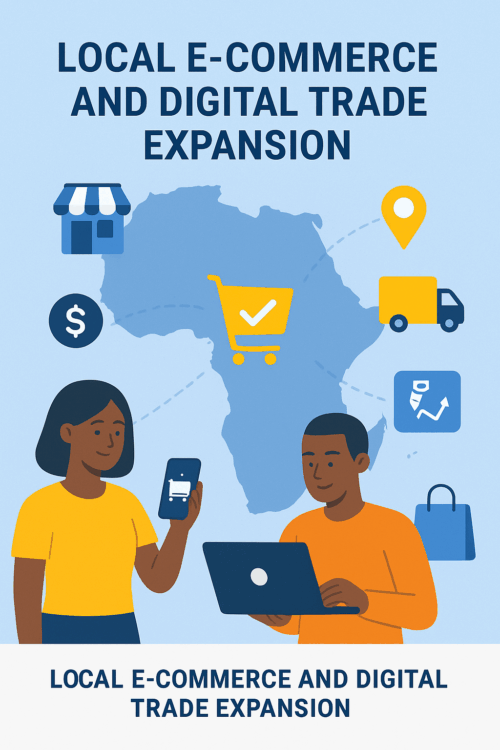











The Rise of Online Shopping and Digital Trade in Africa
Africa’s digital economy is entering a new era. Post-2025, e-commerce and digital trade are no longer urban luxuries—they are engines of growth driving financial inclusion, job creation, and innovation.
With the rapid adoption of smartphones, mobile money, and improved internet connectivity, more African consumers are shopping online and supporting local businesses through digital platforms.
The rise of homegrown e-commerce companies is helping Africa leapfrog traditional retail and create a truly borderless marketplace.
E-Commerce Empowering Local Entrepreneurs
Digital trade is empowering African entrepreneurs and small businesses to reach customers beyond their neighborhoods.
With e-commerce platforms, a fashion designer in Accra or a craftsman in Nairobi can sell products to buyers across Africa and even internationally.
Online platforms have also lowered the entry barrier for startups—no longer requiring large capital or physical stores. Instead, entrepreneurs can build trust, scale fast, and diversify income streams through digital visibility and mobile payment integration.
Top African Marketplaces Dominating Online Retail
Jumia, Konga, Kilimall, and Takealot
These platforms have become synonymous with Africa’s e-commerce revolution. Jumia continues to expand across multiple markets, offering everything from electronics to groceries. Konga and Kilimall are reshaping Nigeria and Kenya’s digital retail experience, while Takealot leads South Africa’s online shopping transformation.
MallforAfrica and Cross-Border E-Shops
MallforAfrica bridges African buyers with global stores, giving consumers access to international brands and helping local sellers tap into global trade. This model highlights Africa’s growing appetite for cross-border commerce.
The Rise of Social Commerce
WhatsApp Business, Facebook Shops, and Instagram Shopping
Social media has become one of Africa’s most powerful e-commerce tools. Entrepreneurs are using WhatsApp Business catalogs, Facebook Shops, and Instagram Shopping to engage customers directly, showcase products, and process sales instantly.
AI and Conversational Commerce
AI-powered chatbots are now automating customer service and guiding purchases through personalized recommendations—bridging the gap between traditional sales and digital interactions.
Selling Globally with Digital Tools
Platforms like Shopify, WooCommerce, and Etsy
These global platforms have simplified online selling for African entrepreneurs. Whether it’s handmade jewelry, digital products, or organic cosmetics, local creators can now build professional e-shops, integrate mobile money, and reach global audiences.
Leveraging Digital Logistics and Payments
Payment gateways like Flutterwave and Paystack combined with delivery startups such as Sendy and Kobo360 make cross-border trade smoother and faster, boosting small business competitiveness.
Digital Payment Systems Powering Online Trade
Fintech Innovators: Flutterwave, Paystack, and M-Pesa
Fintech remains the backbone of Africa’s e-commerce ecosystem. Platforms like M-Pesa, Chipper Cash, Paystack, and Flutterwave have made secure and instant transactions possible—even for customers without traditional bank accounts.
Building Trust Through Secure Payments
Emerging blockchain-based payment systems and tokenized transactions are improving security and transparency, helping build consumer trust in online marketplaces.
Government and Policy Support for Digital Trade
AfCFTA Digital Protocol and Smart Africa Alliance
The African Continental Free Trade Area (AfCFTA) Digital Protocol is a game-changer—promoting cross-border e-commerce, harmonizing regulations, and simplifying digital payments.
Similarly, the Smart Africa Alliance is helping countries integrate policies that support digital innovation and SME growth.
National Digital Strategies
Governments in Ghana, Kenya, Nigeria, and Rwanda are developing digital economy blueprints that support e-commerce startups through infrastructure, funding, and digital literacy programs.
Challenges Facing Africa’s E-Commerce Sector
Logistics, Internet Access, and Customer Trust
While progress is impressive, e-commerce in Africa still faces hurdles—such as inconsistent logistics, poor internet coverage in rural areas, and consumer skepticism about online payments.
Cross-Border Trade and Payment Barriers
Different currencies, tax regimes, and payment systems across African nations can complicate trade. However, fintech innovations and AfCFTA’s framework are gradually bridging these gaps.
Logistics Startups Revolutionizing Delivery
GIG Logistics, Kobo360, Sendy, and DHL Africa eShop
These logistics innovators are solving one of Africa’s biggest e-commerce challenges—delivery reliability. Through technology-driven fleet management and real-time tracking, they’re cutting delivery times and expanding rural access.
Green Logistics and Drone Deliveries
Emerging green logistics initiatives and drone deliveries are paving the way for sustainable and efficient fulfillment networks—particularly in remote areas.
Trends Shaping E-Commerce Beyond 2025
AI, AR/VR, and Personalized Shopping
Artificial intelligence, augmented reality (AR), and virtual try-on tools are enhancing user experience by enabling customers to visualize products before buying.
Sustainability and Green Trade
Eco-conscious packaging, carbon-neutral shipping, and ethical sourcing are becoming central to e-commerce growth strategies.
Youth Employment and Innovation Through E-Commerce
The e-commerce sector is creating new job opportunities for young Africans—from digital marketing and logistics to content creation and app development.
Incubators and tech hubs across the continent are training youth in e-commerce management, coding, and fintech integration—fueling innovation and reducing unemployment.
Building a Digitally Empowered Africa
The future of Africa’s economy is digital, inclusive, and entrepreneurial. As local businesses embrace e-commerce and digital trade, they are not only creating wealth but also building sustainable pathways for youth empowerment and continental integration.
Through collaboration among startups, governments, investors, and innovators, Africa can position itself as a global leader in digital entrepreneurship and trade.
The Road Ahead: Strengthening Africa’s Digital Trade Ecosystem
As Africa’s digital trade ecosystem evolves, collaboration remains the key to sustainable growth. Governments, private investors, and tech innovators must work hand-in-hand to address the remaining barriers to full digital inclusion.
For example, public-private partnerships can help expand broadband infrastructure, enhance cross-border logistics, and simplify digital taxation. Meanwhile, innovation hubs and accelerators—such as AfriLabs, MEST Africa, and Google Hustle Academy—are nurturing the next generation of e-commerce entrepreneurs with funding, mentorship, and technology support.
Digital trade also opens the door to Africa-wide integration through AfCFTA’s Digital Protocol, which seeks to harmonize trade rules, encourage fintech interoperability, and foster a continental digital market. This will make it easier for small businesses in Ghana or Kenya to trade seamlessly with buyers in Nigeria or South Africa.
Empowering Local Businesses Through Technology and Inclusion
The true power of e-commerce lies in empowering everyday entrepreneurs. Tailors, farmers, artists, and small retailers are now using online platforms to sell their products, gain visibility, and access customers they could never reach before.
Initiatives that promote digital literacy and training—especially for women and youth—are essential for inclusive growth. By equipping more people with e-commerce, logistics, and digital marketing skills, Africa can build a workforce ready to thrive in the online economy.
Moreover, fintech platforms like Flutterwave, Paystack, and MTN MoMo are expanding access to financial tools, allowing even rural entrepreneurs to participate in digital markets safely and conveniently.
Investor Confidence and Global Partnerships
Africa’s e-commerce potential has attracted global attention. In recent years, venture capital firms and international organizations have increased investments in local startups.
Funds such as Partech Africa, Launch Africa Ventures, and IFC’s Digital Africa Initiative continue to back scalable e-commerce solutions, logistics startups, and fintech infrastructure.
Global partnerships with platforms like Shopify, Amazon, and Google for Startups are helping African businesses integrate into global value chains, transforming them from consumers to creators in the digital marketplace.
The Future Is Digital, Green, and Borderless
Looking ahead, Africa’s digital trade ecosystem will continue to evolve toward sustainability, innovation, and inclusivity. AI-powered supply chains, blockchain-based payments, and eco-friendly delivery systems are setting new standards for the next generation of online businesses.
As digital infrastructure expands and policies mature, Africa is poised to become one of the fastest-growing e-commerce regions globally—a hub for innovation where local ideas meet global opportunity.
The transformation is already underway. Each online purchase, digital payment, and new startup represents another step toward a more connected, empowered, and prosperous Africa.
Call to Action (for Baobab Entrepreneur):
Africa’s e-commerce revolution is redefining entrepreneurship, one transaction at a time.
Stay updated on digital business trends, startup funding, and innovation stories at Baobab Entrepreneur.