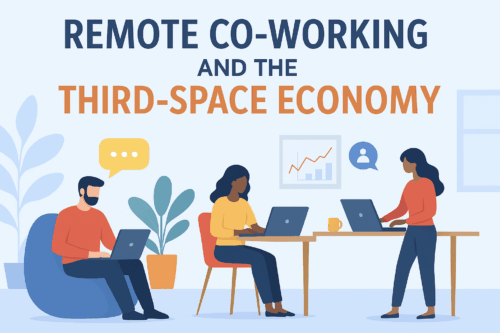
Remote Co-Working and the Third-Space Economy: Redefining the Future of Work










The Third-Space Economy is reshaping how we think about work, collaboration, and innovation. In today’s digital era, professionals are no longer confined to traditional offices or home workstations. Instead, they are embracing co-working spaces, hybrid work models, and digital collaboration tools that promote flexibility, creativity, and community. Across Africa and beyond, this transformation is powering a new wave of entrepreneurship and digital productivity.
The Rise of the Third-Space Economy
The concept of the Third Space refers to places that exist between home (the first space) and the office (the second space). As remote and hybrid work become the norm, these spaces—coffee shops, libraries, co-working hubs, and innovation centers—are emerging as vital ecosystems for collaboration and business growth.
With more professionals seeking work-life balance, the Third-Space Economy represents a shift towards autonomy and connectedness. It’s not just about where people work, but how they engage, share ideas, and build community through digital means.
The Evolution of Co-Working Spaces
Once the domain of tech startups and freelancers, co-working spaces have evolved into community-driven innovation hubs that host entrepreneurs, creatives, and professionals across industries.
Spaces like WeWork, Regus, and Impact Hub Accra are redefining what an office can be—open, collaborative, and designed for flexibility. These environments foster networking, mentorship, and collective growth, helping members find partnerships, clients, and investors.
Why the Third Space Matters for Entrepreneurs and Freelancers
For entrepreneurs and freelancers, the Third Space offers more than just Wi-Fi and desks. It’s a hub for collaboration, creativity, and opportunity.
In shared work environments, individuals can tap into collective expertise, access training, and build relationships that drive their ventures forward. Whether in Accra, Nairobi, or Lagos, co-working spaces create supportive ecosystems for small business owners, remote teams, and digital creators looking to scale their operations affordably.
Digital Infrastructure Powering Remote Collaboration
Behind the success of the Third-Space Economy lies powerful digital infrastructure. Tools such as Zoom, Slack, Notion, Trello, and Google Workspace have revolutionized how teams communicate and manage projects.
Artificial Intelligence (AI) and automation further enhance this shift—virtual assistants schedule meetings, manage workflows, and streamline remote collaboration. The result is a seamless virtual office experience that connects professionals globally while maintaining productivity and accountability.
Africa’s Co-Working Movement
Africa is witnessing an exciting co-working revolution driven by innovation and entrepreneurship. Leading the charge are Impact Hub Accra, Workshed Africa, Kofisi, and MEST Africa, which offer creative environments that nurture startups and digital nomads.
In Ghana, Nigeria, Kenya, and South Africa, co-working spaces are not just offices—they are launchpads for ideas. They provide access to funding, mentorship, and tech infrastructure, bridging the gap between local talent and global opportunity.
Economic Impact of Third Spaces
The Third-Space Economy has become a catalyst for economic growth. By offering affordable, flexible workspaces, these hubs enable startups, SMEs, and freelancers to operate efficiently without heavy overhead costs.
They also play a key role in strengthening local innovation ecosystems, stimulating employment, and promoting the digital and creative economies that are vital to Africa’s long-term development. The ripple effects extend to surrounding businesses—cafés, vendors, and transport services—boosting local economies in urban centers.
Designing the Ideal Co-Working Environment
The most successful co-working spaces prioritize sustainability, inclusivity, and productivity. Design elements like natural lighting, ergonomic furniture, and open layouts promote collaboration and mental well-being.
In addition, forward-thinking operators integrate eco-conscious solutions such as solar energy and recycling programs. Inclusive design ensures accessibility for all workers—regardless of gender, disability, or background—creating equitable spaces that drive innovation.
The Role of Government and Private Investment
The growth of the Third-Space Economy depends on supportive policies and investments. Governments across Africa are beginning to recognize co-working spaces as key enablers of the digital economy and youth employment.
Public-private partnerships with organizations like GIZ, the World Bank, and the African Development Bank are funding programs that promote remote work infrastructure and empower creative entrepreneurs. Encouraging tax incentives, affordable internet access, and startup grants will be vital to sustaining this momentum.
Remote Work Culture and Digital Nomads in Africa
The rise of the digital nomad lifestyle is redefining Africa’s role in the global workforce. With improved internet connectivity and affordable co-working spaces, cities like Accra, Cape Town, and Nairobi are becoming attractive destinations for remote professionals.
This new workforce values freedom, flexibility, and purpose-driven work, often blending travel with entrepreneurship. For Africa’s youth, this culture shift represents an opportunity to compete globally while contributing locally, harnessing skills for digital innovation and sustainability.
The Future of Workspaces
As we approach 2025, the future of work lies in the fusion of physical and digital spaces. The next generation of co-working environments will use smart technology, IoT devices, and AI-driven analytics to personalize user experiences and optimize collaboration.
The Third-Space Economy will continue to drive innovation by empowering entrepreneurs, freelancers, and businesses to thrive beyond borders. In Africa, this transformation will be a cornerstone for sustainable development, inclusive growth, and digital competitiveness.
Expanding Opportunities in the Third-Space Economy
The growth of the Third-Space Economy is not just transforming how people work—it’s also creating new business opportunities across multiple sectors. Entrepreneurs and investors are now recognizing co-working spaces as profitable and scalable ventures, especially in emerging markets like Africa, where youth-led innovation is booming.
For instance, local operators are building hybrid spaces that combine co-working, co-living, and community hubs, designed to serve digital professionals and startups under one roof. These models appeal to the rising digital nomad community, who seek flexible environments with reliable internet, affordable accommodation, and collaborative energy.
How Technology is Driving Third-Space Innovation
At the heart of the Third-Space Economy lies cutting-edge technology. Artificial Intelligence (AI) and the Internet of Things (IoT) are transforming workspace management—automating lighting, climate control, and security to enhance energy efficiency.
Meanwhile, blockchain technology is enabling secure digital contracts and transparent workspace memberships, while augmented and virtual reality (AR/VR) tools are making remote collaboration more immersive. These innovations are paving the way for a seamless integration of physical and virtual work environments that empower professionals worldwide.
Community Building and Knowledge Sharing
Unlike traditional offices, co-working spaces thrive on community and collaboration. They are incubators for shared learning, mentorship, and professional development. Many hubs in Africa—such as Impact Hub Accra, Workshed Africa, and Kofisi—regularly host training sessions, accelerator programs, and networking events that foster local innovation ecosystems.
This culture of knowledge exchange helps startups gain valuable insights, connect with investors, and access resources that fuel growth. Beyond professional gain, these spaces also nurture mental well-being, offering a sense of belonging and support among like-minded individuals.
Sustainability and Social Impact in Co-Working Models
As global attention shifts toward sustainable business practices, co-working operators are integrating green design and environmental responsibility into their operations. From solar-powered buildings and smart energy systems to eco-friendly furniture and waste recycling, sustainability is becoming a core feature of the Third-Space Economy.
Furthermore, many co-working spaces engage in social impact initiatives—supporting women entrepreneurs, marginalized youth, and rural innovators. By offering access to technology and mentorship, these hubs are reducing inequality and empowering diverse communities to participate in the digital economy.
Challenges Facing the Third-Space Economy in Africa
Despite its rapid rise, the Third-Space Economy faces several challenges that need attention. Limited internet connectivity, power instability, and high setup costs can hinder the expansion of co-working hubs, especially in smaller cities and rural areas.
Moreover, there is a need for stronger digital literacy programs to ensure that young professionals and small business owners can fully leverage online collaboration tools. Governments and private organizations must work together to improve infrastructure, reduce costs, and enhance access to digital resources for all.
Government and Private Sector Synergy
The collaboration between governments, investors, and private innovators will be essential in shaping the future of co-working across Africa. National policies that promote remote work, digital entrepreneurship, and innovation funding can accelerate the continent’s transformation.
For example, offering tax incentives to co-working operators, supporting startup grants, and improving fiber-optic connectivity can make Third Spaces more accessible. Private companies and investors also have a role in expanding regional networks of co-working hubs, enabling cross-border collaboration and business scaling.
Africa as a Global Remote Work Destination
With the global rise of digital nomadism, Africa is increasingly positioning itself as a top remote work destination. Countries like Ghana, Kenya, and South Africa are developing attractive ecosystems that combine vibrant culture, low cost of living, and strong digital infrastructure.
Co-working spaces are becoming the gateway to these destinations, providing safe, connected, and community-focused environments for both local and international professionals. As more remote workers choose Africa as their base, the continent stands to gain economically and culturally, reinforcing its status as a global innovation hub.
The Long-Term Vision — Hybrid Work Meets Human Connection
The future of the Third-Space Economy will merge the best of both worlds: digital efficiency and human interaction. Hybrid workspaces will continue to evolve as smart, adaptable environments where teams can meet in person, brainstorm, and then seamlessly continue work online.
This model promotes mental well-being, diversity, and inclusion, while supporting global talent mobility. As technology advances, these spaces will also become centers of innovation—testing grounds for startups, digital creativity, and sustainable development projects that drive regional progress.
The Power of Connection in a Borderless World
The Third-Space Economy is redefining the meaning of work in the 21st century. It blends technology, community, and innovation to create opportunities that transcend traditional boundaries. Across Africa and the world, co-working hubs are fostering a culture of collaboration, sustainability, and inclusion, enabling people to work smarter, live better, and grow together.
As we look to the future, the success of this movement will depend on continued investment, supportive policies, and creative leadership. The Third-Space Economy is not just about physical spaces—it’s about building ecosystems where people and ideas thrive, shaping the future of work for generations to come.
Emerging Business Models in the Third-Space Economy
The Third-Space Economy continues to evolve with innovative co-working business models that cater to the changing demands of modern workers. Beyond traditional shared offices, we are seeing the rise of subscription-based memberships, on-demand workspace rentals, and hybrid community models that combine physical and digital benefits.
For example, many co-working brands now offer virtual memberships, giving freelancers and remote teams access to global networks, virtual meeting tools, and mentorship programs without needing a permanent physical desk. Others are introducing co-living spaces, which blend accommodation and workspace for digital nomads seeking work-life balance on the move.
In Africa, hybrid co-working models that integrate training, business incubation, and innovation labs are particularly successful. They not only provide affordable workspaces but also act as gateways to funding, networking, and capacity-building for young entrepreneurs.
Technology Integration in Co-Working Spaces
As technology becomes the backbone of modern collaboration, smart workspaces are transforming how people engage with their environments. The integration of IoT devices allows for seamless management of lighting, air quality, and occupancy, improving energy efficiency and comfort.
AI-powered analytics help co-working managers track space utilization, optimize pricing models, and personalize user experiences. Meanwhile, AR and VR technologies are enabling virtual tours and immersive networking, helping remote professionals collaborate as if they were physically together.
These tech-driven advancements are positioning co-working spaces as innovation laboratories, where startups can test prototypes, host hackathons, and engage with emerging technologies that drive digital transformation.
Creating Inclusive and Accessible Workspaces
The success of the Third-Space Economy relies on how inclusive and accessible these environments are. Co-working spaces must be designed to welcome diverse groups—including women entrepreneurs, people with disabilities, and rural innovators.
By implementing universal design principles, providing child-friendly zones, and ensuring affordable membership plans, co-working operators can expand participation and impact. Initiatives like Impact Hub’s women-focused programs and Kofisi’s community partnerships demonstrate how inclusive models create sustainable economic and social value.
Inclusivity also means bridging the digital divide. Offering digital literacy workshops and access to modern tools and internet connectivity helps marginalized groups fully participate in the new digital economy.
Sustainability as a Core Business Pillar
Sustainability is fast becoming a defining feature of modern co-working environments. The move toward eco-conscious design—using renewable materials, solar power, and efficient energy systems—reduces the environmental footprint of these spaces.
In regions like Africa, where electricity reliability remains a challenge, off-grid solar solutions are helping co-working spaces maintain operations sustainably. The focus on green design not only benefits the planet but also attracts eco-aware professionals and global investors who prioritize environmental responsibility.
Moreover, many co-working hubs now host climate innovation programs and green entrepreneurship initiatives, aligning workspace management with global sustainability goals.
Collaboration Between Public and Private Sectors
The growth of the Third-Space Economy depends on a strong partnership between governments, private investors, and development organizations. Public policies that support digital innovation, youth entrepreneurship, and affordable connectivity can significantly accelerate progress.
Programs supported by organizations like GIZ, the World Bank, and African Development Bank are already helping establish innovation hubs and digital workspaces across Africa. Meanwhile, private investors are funding real estate projects that convert underused properties into modern co-working facilities—creating both social and economic value.
By aligning public and private interests, Africa can establish itself as a global model for digital and hybrid work ecosystems.
Digital Nomads and the Changing Workforce Culture
The rise of the digital nomad lifestyle is redefining workforce culture. Professionals no longer see work as tied to a single location. Instead, they seek experiential freedom, traveling across cities and countries while staying productive through digital tools.
Africa’s growing reputation as a remote work-friendly region is attracting digital nomads from around the world. With affordable living costs, cultural diversity, and expanding co-working infrastructure, countries like Ghana, Kenya, and Rwanda are becoming attractive destinations for long-term remote work.
Local entrepreneurs are also embracing this mobility—setting up regional co-working franchises and remote collaboration networks that connect local talent to global opportunities.
Preparing for the Future of Work
The future of work will be shaped by continuous adaptation, where technology, human connection, and sustainability converge. The next phase of the Third-Space Economy will emphasize smart integration, using real-time data, AI analytics, and virtual engagement to create highly responsive and personalized work environments.
Physical co-working spaces will serve as innovation anchors, while virtual offices extend collaboration globally. This blended model ensures that workers—regardless of geography—can access opportunities, mentorship, and markets.
As businesses evolve, the ability to build flexible and community-centered workspaces will become a competitive advantage. Organizations that embrace this shift will not only retain talent but also drive innovation at an unprecedented scale.
Final Thoughts — Building a Connected Future
The rise of the Third-Space Economy is more than a trend—it’s the foundation of a connected, collaborative future. Across Africa and beyond, co-working spaces are empowering entrepreneurs, freelancers, and digital workers to thrive in inclusive, sustainable, and tech-driven environments.
By nurturing innovation, investing in digital infrastructure, and promoting collaboration, the Third-Space movement is unlocking new possibilities for economic transformation. As we move deeper into the hybrid work era, one thing is clear—the future belongs to those who embrace flexibility, creativity, and community.
Conclusion — Building a Resilient Third-Space Economy
The Third-Space Economy represents more than a work trend—it’s a revolution in how people live, create, and connect. Through co-working hubs, virtual offices, and digital collaboration tools, Africa is unlocking new frontiers of opportunity and innovation.
By investing in digital infrastructure, sustainable design, and inclusive policies, governments and private players can ensure that this transformation benefits all. The future of work in Africa is borderless, collaborative, and powered by the Third-Space Economy.