







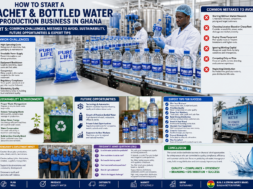
Producing high-quality drinking water requires more than simply filling sachets or bottles with water. Consumers expect every package to be clean, safe, refreshing, and compliant with Ghana’s drinking water standards. Achieving this consistently depends on using the right treatment processes, investing in suitable equipment, and planning your startup budget carefully.
This section explains the water treatment process, the essential equipment you’ll need, and the major costs involved in setting up a sachet and bottled water production business in Ghana.
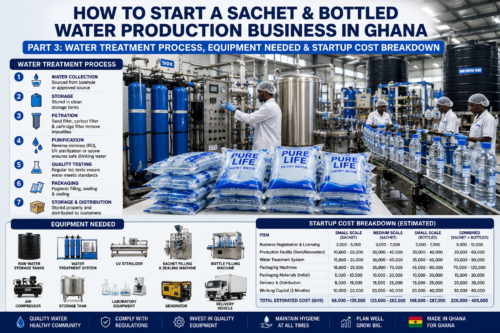
Water Treatment and Production Process
The primary goal of water treatment is to remove contaminants and ensure that the final product is safe for human consumption. The exact treatment process depends on the quality of the source water and should always be based on laboratory analysis.
Step 1: Water Collection
Production begins with sourcing raw water from an approved source.
Common sources include:
- Boreholes
- Municipal water supply
- Protected wells
- Other approved water sources
Regardless of the source, water should undergo laboratory testing before production begins.
Step 2: Water Storage
Raw water is stored in storage tanks before treatment.
Storage tanks should be:
- Food-grade
- Covered to prevent contamination
- Easy to clean
- Regularly sanitized
Proper storage protects water quality before it enters the purification system.
Step 3: Filtration
Water passes through several filtration stages to remove impurities.
Typical filtration may include:
Sand Filtration
Removes:
- Dirt
- Sediment
- Rust particles
- Suspended solids
Activated Carbon Filtration
Helps remove:
- Chlorine
- Odors
- Organic compounds
- Unpleasant taste
Cartridge Filters
Fine filters remove very small particles that remain after previous filtration stages.
Step 4: Water Purification
Depending on laboratory test results and applicable standards, additional purification methods may include technologies such as:
- Reverse Osmosis (RO)
- Ultraviolet (UV) sterilization
- Ozonation
- Other approved treatment systems
The appropriate combination should be selected based on the characteristics of the source water and professional guidance. Treatment systems should be properly maintained to ensure consistent performance.
Step 5: Quality Testing
Quality control is an ongoing process, not a one-time activity.
Routine testing helps verify that treated water consistently meets required standards.
Areas commonly monitored include:
- Microbiological safety
- pH
- Taste and odor
- Appearance
- Other parameters required by applicable regulations
Regular testing helps protect consumers and maintain confidence in your brand.
Step 6: Packaging
After treatment, the water is packaged using hygienic equipment designed to minimize contamination.
Packaging should be carried out in a clean production environment by trained personnel following good manufacturing practices.
Step 7: Sealing and Coding
Packages are sealed and may be marked with information such as:
- Batch number
- Production date
- Expiry or best-before date (where applicable)
- Product identification
Proper coding supports product traceability and inventory management.
Step 8: Storage and Distribution
Finished products should be stored:
- In a clean environment
- Away from direct sunlight
- Away from chemicals or contaminants
- Using a first-in, first-out (FIFO) inventory system
Good storage practices help preserve product quality before distribution.
Essential Equipment Needed
Equipment requirements vary depending on whether you produce sachet water, bottled water, or both.
Equipment for Sachet Water Production
A typical sachet water production setup may include:
- Raw water storage tanks
- Water treatment system
- Sand filters
- Activated carbon filters
- Cartridge filters
- Reverse osmosis system (where required)
- UV sterilizer or ozone generator
- Stainless steel storage tanks
- Sachet filling and sealing machine
- Air compressor (if required)
- Pumps
- Pipes and fittings
- Laboratory testing equipment
- Generator or backup power source
- Delivery tricycle, van, or truck
The scale and specifications of the equipment should match your planned production capacity.
Equipment for Bottled Water Production
A bottled water production line generally requires:
- Water purification system
- Bottle rinsing machine
- Bottle filling machine
- Bottle capping machine
- Labeling machine
- Date coding machine
- Shrink wrapping machine
- Conveyors
- Air compressor
- Storage tanks
- Packaging tables
- Laboratory equipment
- Delivery vehicles
Automated systems can improve efficiency but typically require a larger investment.
Quality Control Equipment
Maintaining product quality requires appropriate testing tools.
Depending on your operation, quality control may involve equipment used to monitor water quality and verify compliance with applicable standards. Businesses should consult qualified professionals to determine the testing equipment appropriate for their production processes.
Facility Equipment
In addition to production machinery, businesses should budget for:
- Office furniture
- Computers
- Shelving
- Pallets
- Hand trucks or forklifts (for larger operations)
- Fire extinguishers
- Safety signage
- Protective clothing for staff
- CCTV and security systems
Supporting equipment contributes to operational efficiency and workplace safety.
Equipment Maintenance
Regular maintenance helps reduce downtime and extend the lifespan of production equipment.
A maintenance program should include:
- Routine cleaning
- Scheduled servicing
- Replacement of worn parts
- Calibration of instruments
- Preventive inspections
- Staff training on equipment operation
Well-maintained equipment also supports consistent product quality.
Startup Cost Breakdown
The amount required to start a water production business varies depending on factors such as:
- Production capacity
- Facility size
- Location
- Equipment specifications
- Level of automation
- Regulatory compliance costs
- Distribution requirements
Entrepreneurs should obtain quotations from multiple suppliers before making purchasing decisions.
Typical Startup Cost Categories
Your initial investment may include:
Business Registration and Licensing
Budget for:
- Business registration
- Regulatory applications
- Laboratory testing
- Professional services
- Local authority permits where applicable
Always verify the latest fees with the relevant authorities.
Production Facility
Expenses may include:
- Rent or lease
- Renovation
- Plumbing
- Electrical installation
- Drainage improvements
- Flooring
- Water storage infrastructure
Production Equipment
This is usually the largest portion of the startup budget and may include:
- Water treatment systems
- Packaging machines
- Storage tanks
- Pumps
- Compressors
- Laboratory equipment
- Backup power systems
Packaging Materials
Initial inventory may include:
- Sachet film
- PET bottles
- Caps
- Labels
- Cartons
- Shrink wrap
Maintaining adequate stock helps avoid production interruptions.
Delivery and Distribution
Distribution expenses may include:
- Delivery tricycle
- Pickup truck
- Van
- Fuel
- Vehicle branding
Reliable transportation is essential for serving wholesalers and retailers efficiently.
Working Capital
Every new business should set aside funds for operating expenses during the first few months.
Working capital may cover:
- Staff salaries
- Utilities
- Fuel
- Maintenance
- Packaging materials
- Marketing
- Unexpected repairs
Adequate working capital reduces the risk of cash flow problems during the early stages of the business.
Financing Your Water Production Business
If personal savings are insufficient, entrepreneurs may explore financing options such as:
- Commercial bank loans
- Microfinance institutions
- Credit unions
- Equity investors
- Business partners
- Government or development programs that support eligible SMEs
- Grants or competitions, where available
Before accepting financing, carefully assess repayment obligations, interest rates, and the overall financial impact on your business.
Investment Tips for First-Time Entrepreneurs
To manage startup costs effectively:
- Start with a production capacity that matches your budget and expected demand.
- Invest in durable, quality equipment rather than focusing only on the lowest price.
- Build relationships with reliable suppliers for machinery and packaging materials.
- Prioritize quality control and preventive maintenance.
- Maintain accurate financial records from the beginning.
A phased expansion strategy often reduces financial pressure while allowing the business to grow sustainably.
Conclusion
The success of a sachet and bottled water production business depends on a combination of effective water treatment, reliable equipment, and sound financial planning. Investing in quality systems, maintaining high production standards, and budgeting carefully from the outset will help you build a business that earns customer trust and is positioned for long-term growth.